
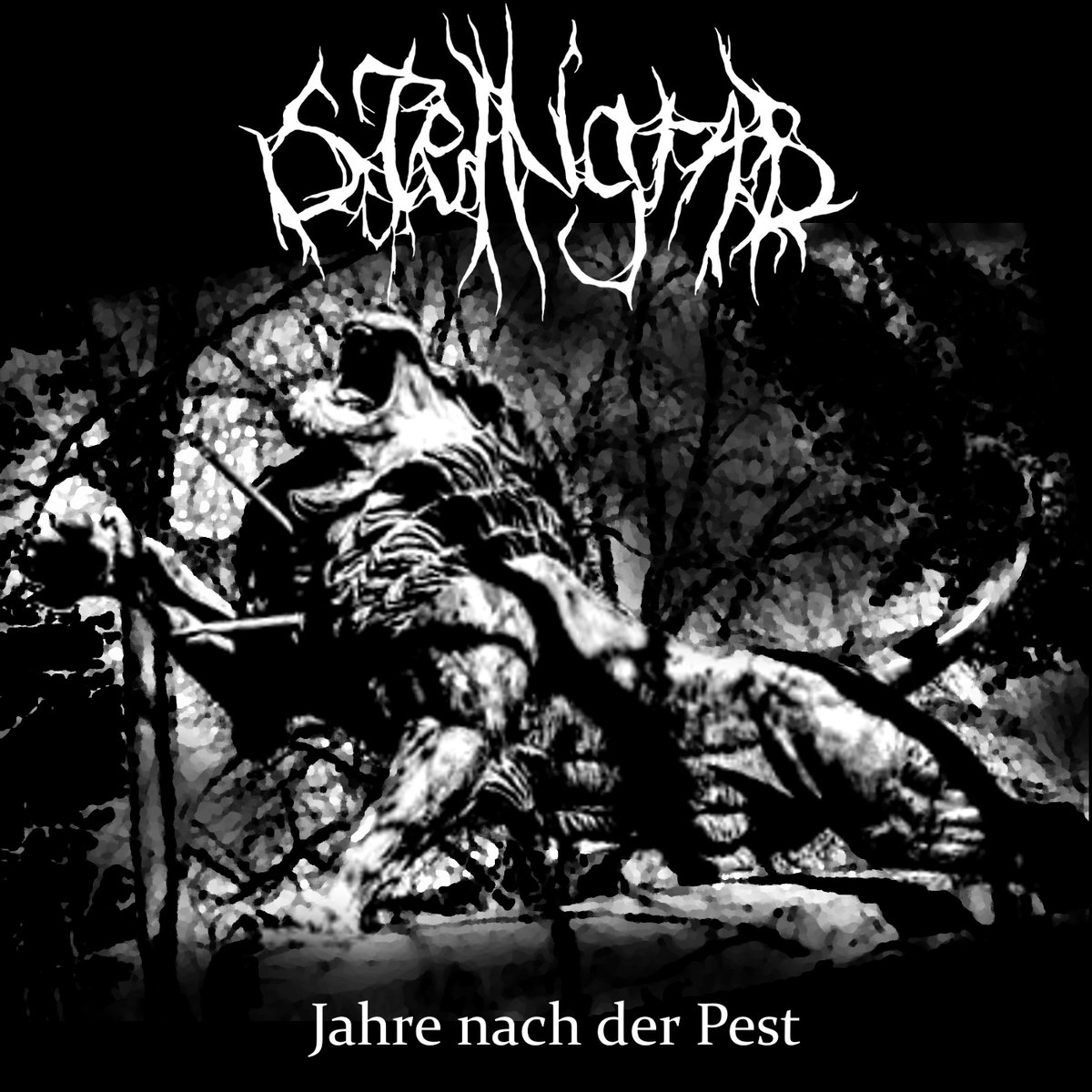

Depressive black metal is exactly what it sounds like – dark and dreary tones evoke a highly depressive atmosphere, one that makes you shut the curtains and bask in the tones that strangely comfort when feeling low. However, what surprises me sometimes about black metal and its tones is its inherent tendency to be warm. It’s almost ironic, if you think about it – black metal, whose main characteristic is being cold and bleak, has suddenly turned warm and comforting, it’s as if more and more listeners are finally able to find something they can connect to. This leads me to Steingrab, whose dark atmosphere and warm tonalities on Jahre nach der Pest present an interesting juxtaposition that should be looked into with a fine-toothed comb.
Now, depressive suicidal black metal already exists – bands like Shining (the Swedish one) have been creating music that fills that void for years – but depressive black metal is an interesting starting point to describe a band’s music. For one thing, if technicality is warranted, this qualifies as atmospheric black metal, and you can hear that in how the atmosphere is constructed. Steingrab does an excellent job in creating music that fully encompasses different tones and elements to create something dark and bleak yet with a warmth that initially surprised me here. The first four songs on Jahre nach der Pest all fly dangerously close to acoustic, as if Steingrab was carefully layering each element and then building up suspense for when the vocals or some dissonant sound would come and shatter the illusion of peace. Of course, the peace is broken on “Fort von hier” with the harsh vocals and increased pacing of the drums, but then it settles back into the atmospheric and acoustic and later, returning to layer the suspense.
The album continues a lot in this manner – the rise of suspense, the shattering of illusion and the shift back. There are moments of waiting for something to happen and when it does, it’s completely unexpected and within the framework can easily be missed, particularly within the other sounds of the album. The vocals take center stage; equal parts harsh, dark, and chaotic and break the monotony of the music that plays behind them, especially after hearing those warm, acoustic sounds for as long as they exist. The darkness here lies in the moments when dissonance seems to take hold of everything but it doesn’t hang around too long, and the music returns to those warm tones that are very familiar by this point – aka monotony.
Outside of the aforementioned monotony, the main issue I have with Jahre nach der Pest is its production. I wish it had been cleaner – a lot of the music seems to be muddled together, especially in the first few tracks. This album would have benefited from grouping together some of its songs or editing certain moments for cohesion. 45 minutes is a fantastic run time, but it doesn’t work when most of the songs sound the same and can easily be played in the background with not much thought given in the meantime.

All in all, Jahre nach der Pest is a good album, but it’s not a great one. I wish there were more to it that held my attention. The juxtapositions of warm and bleak are details that need fleshing out further, one where true cohesion can be fully achieved. With that said, this is an album worth exploring.
– Hera
Jahre nach der Pest is available September 24 from Soundage Productions. For more information on Stengrab check out their Facebook page.




Leave a Reply