
I’m sure we’ve all had that lightbulb moment when it comes to a certain album. Where it finally clicks with you, and feels like discovering music again for the very first time. It could be a recent release; one that perhaps all your friends have been raving about since it dropped, but never did much for you (until it does). With the multitude of incredible metal releases that have been accumulating for over 50 years at this point, I wouldn’t blame you for having this moment with albums many years, even decades old. The latter is what happened with me and this monolith of dark majesty. Energized by such releases as Stormkeep’s Tales of Othertime and Moonlight Sorcery’s Piercing through the Frozen Eternity in 2021-22, I began to realize that the overtly melodic side of black metal was quickly becoming my favorite take on the genre. Yet I was craving something more, I just didn’t know what until I found it.
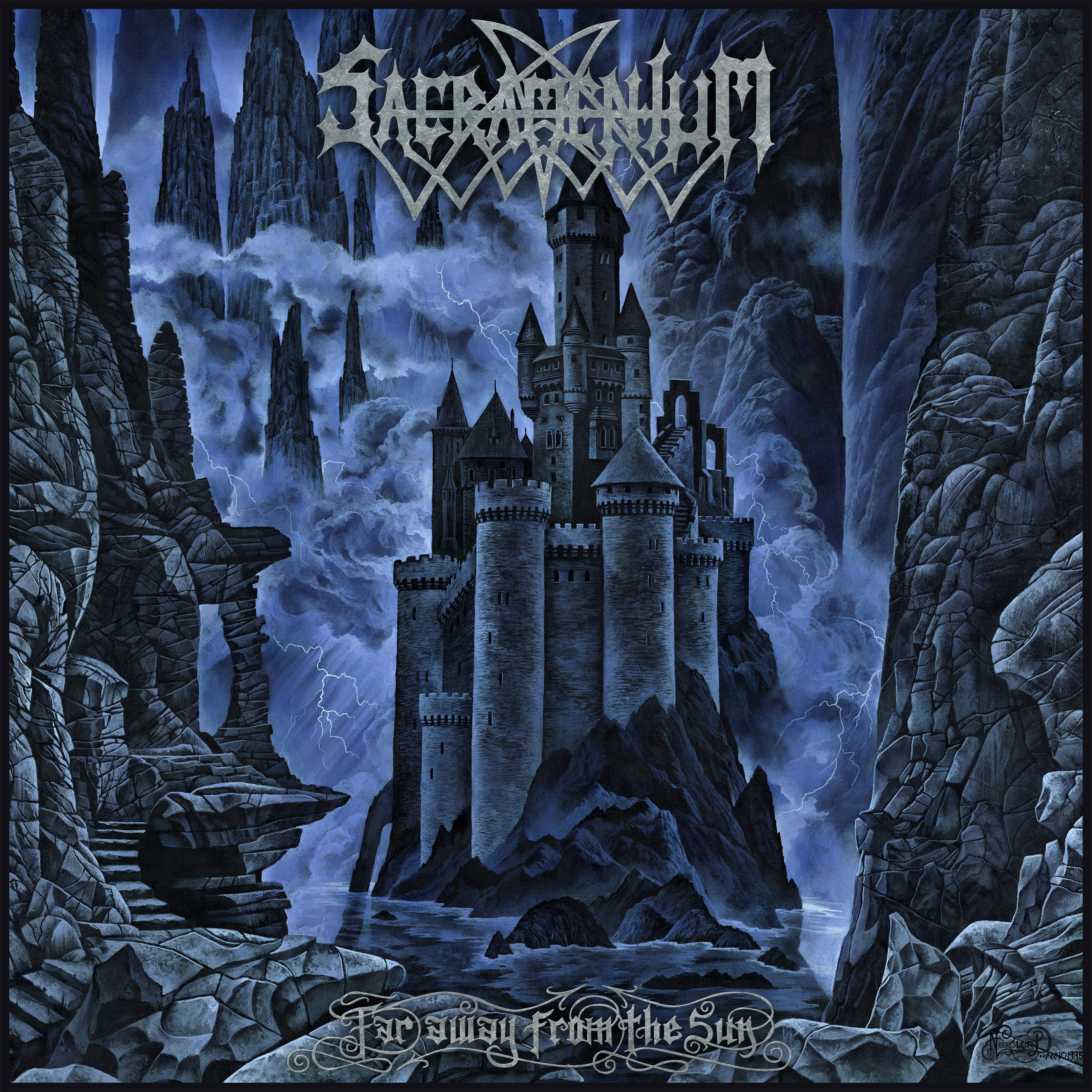
When it comes to searching for a specific sound it’s often a good idea to start at the source, so it seemed reasonable to (re-)examine some of the foundational melodic black metal releases of the mid/late-’90s. Dissection and Dawn had never done much for me (widely celebrated as they are), Kvist and Vinterland are great but were never quite elite-tier, while Windir has remained a consistent favorite since I was a teenager. Among the most notable acts in the early years of the subgenre there was really just one left: Gothenburg’s Sacramentum. I had certainly listened to this album in my black metal youth, but it never made much of an impression (aside from Necrolord’s legendary album art). I likely dismissed them as yet another Swedish act that was either a Dissection clone or just an incessant stream of blast beats and tremolo picking. How very wrong my assumptions were. Upon listening to Far Away from the Sun again for the first time about three and a half years ago, it was as if the stars aligned and opened a dark gateway to the very heart of what I had been searching for all along… an album with all the riffs, atmosphere, and melody you could want, but with an impeccable sense of pacing and flow in the songwriting tying all these essential elements together. And perhaps most importantly, at its core the true essence of black metal (whatever that may actually be) is never sacrificed. That is what ultimately defines Far Away from the Sun for me.
This pinnacle of melodic black metal is celebrating the 30th anniversary of its release today, so I will be taking a (very) deep dive into everything that makes it not just one of the best black metal albums ever created, but my personal favorite album. Helping me out along the way are a handpicked group of musicians creating metal today, still inspired by this decades-old masterwork… along with with two others directly responsible for the album itself. Perhaps this will be the guide that piques your interest enough to get you give an initial listen, or maybe revisit for the first time since you were a teenager first discovering black metal. Ideally, I can convince you of why it deserves the top spot in the melodic black pantheon of the 1990s. Let us enter the space beyond, descend into fog-covered realms and cold icewinds, and travel far away from the sun…

As with many of the aforementioned acts from Sweden of the ’90s, Sacramentum miraculously managed to hit the ground running with their inaugural full-length. Far Away from the Sun was preceded by only two releases: the rough but ambitious demo Sedes Impiorum (1993) and the EP Finis Malorum (1994). The former is very much within the realm of early death metal, but the EP that followed is essentially the prelude to the legendary full-length. In an interview contained within the liner notes for Dan Swanö’s 2012 remaster of Far Away from the Sun — the definitive mix of the album, which is going to serve as my point of reference throughout — Sacramentum founder, guitarist, and primary songwriter Anders Brolycke cites At the Gates’ Gardens of Grief and Grotesque’s Incantation as primary influences.
“Listen to both EPs and you’ll instantly know where Finis Malorum came from. That style of songwriting totally blew me away and forced a jumpstart in my own writing process.”
Those with elite taste are already familiar with the connecting thread between these two releases: Alf Svensson. The former At the Gates guitarist was an essential component on Gardens, The Red in the Sky Is Ours, and With Fear I Kiss the Burning Darkness before tragically ceasing to play this style of metal ever again. Yet the influence of his riffing style (now dubbed “Alf the Gates” by some) spreads far and wide to this day across many bands; from Abigor to Mörk Gryning to Mi’gauss and beyond… but most importantly, Sacramentum. Effortlessly interwoven guitars that join together in multilayered harmony, rise and fall before splitting off in polyphonic grandeur, like a distorted pair of courting birds in flight. Svensson’s early work falls under what we’d call death metal today, but these lines were surely more blurred at the time. Sacramentum may not have been the first black metal band to incorporate the style, but they certainly created a blueprint for this riffing to be imposed onto the world of black metal… one of tremolo-picked chords, streams of blast beats, and dark atmosphere.
One need only listen to opener “Fog’s Kiss” to experience the full force of the riffing that Far Away from the Sun has on offer throughout the entirety of its runtime. As Carl Skildum (Skjolden, Majesties, Inexorum) wrote to me, this track:
“makes what is essentially a two-chord introductory verse seem like a whole string quartet is playing while your ship sinks, and the genius of it is that it is setting up for a much more complex chorus full of counterpart and harmony.”
This third verse/chorus — only about 70 seconds into the entire album — perfectly demonstrates the manner in which Brolycke’s multilayered guitar playing often moves in anticipation of the sections to follow. Throughout the entire album, there’s so many subtle changes in riffs and harmonies that have me finding new discoveries almost every time I listen; there’s a lot going on, but thankfully it’s never been overpowering like certain types of avant-garde and progressive metal can be. Skildum continues:
“I use these verse/chorus terms loosely because the songs are often linear and don’t rely on standard song structure — they just keep evolving into new forms that flow naturally from one another. Of course there’s that hammer-on rolling riff that everyone probably thinks about for this song, but the great thing is that even after that heroic moment, the glorious riffs just. keep. coming.“
And indeed they do. The dark yet elegant final section of the track is one of the standout moments on the entire album, coming across like a melodic version of Mayhem’s “Pagan Fears”; as impressive as this riff is all on its own, Nicklas Rudolfsson’s imperial 6/8 beat (replete with great fills, another staple of the album) is its essential counterpart.
As is often the case with opening tracks “Fog’s Kiss” is probably the most well-known and highly regarded song on the album, but the intensity doesn’t let up anytime soon; the seamless transition into the title track is similarly a blast-fest. It’s not until the third track, “Blood Shall Be Spilled,” that the album finally takes a bit of a breather… and eventually showcases what is perhaps the most powerful section on the entire album. An opening riff drenched in melancholia, before further blasts and trem-picked fury leads to Nisse Karlén’s legendary throat-shredding chorus of “In the name of Satan / Blood shall be spilled. / In the mighty name of Satan / Blood shall be fucking spilled.” The most blunt lyrics on the entire album to be sure, but when combined with such a hard-hitting aural assault what else could have been written to accompany them? It’s when the song slows down that we get the key moment of nocturnal beauty, as Carl Skildum describes:
“That stately harmonized ending from about 2:57 on is all I’ve ever wanted from heavy metal.”
I’m very much inclined to agree with him. The layered harmonies that accompany the final verses are tremendous in their composition, exceptionally paired with a semi-lead that ultimately resolves into a dark, polyphonic symphony of blackened grandeur.

Anders Brolycke was generous enough with his time to respond to an inquiry I made about looking back at Far Away from the Sun after three decades, and he spoke to some of what drove him during the album’s creation.
“For me personally, harmony and atmosphere were always central. I have always been (and still am) obsessed with coloring chords and subtle harmonic movements. Every note had a purpose. Nothing was random. Music is at its core combinations of frequencies and human beings react very deeply to that, often unconsciously. If you are connected enough to your own inner emotional response, you can sense when certain harmonies resonate in a meaningful way within yourself. And when something resonates deeply within one person, there is a good chance it will resonate within someone else, somewhere else as well. It becomes basically an invisible bridge between people who may never meet, but who recognize something familiar in each other through sound and emotion.”
Nowhere is this sentiment better exemplified than on the album’s midpoint, my personal favorite, and one that was mentioned by multiple musicians whose input I had asked for: “Cries from a Restless Soul.” Preceded by the less intense “When Night Surrounds Me,” it immediately cranks things back up to 11 with its intensely melancholic melody and even more furious blasts. While the descending riff is the focal point, the rhythm guitar here is a perfect example of how something so simple can go far. In its middle section Brolycke debuts some of the most technical riffing to be found on the album (perhaps only rivaled by “Obsolete Tears” and “Beyond All Horizons“). Writes Carl Skildum:
“They even do the wonderful trick of speeding up the tempo of the blasts at just the right moment — you’re already flying, and then the afterburner kicks in.”
Andrew Brown (The Mosaic Window, Bone Abduction) also cited this track when asked about a prized riff on Far Away from the Sun:
“Hard to choose a favorite, but the opening riff of ‘Cries from a Restless Soul’ was always a major standout for me. And that change into half-time hits so good. Total melodic sorrow!”
Capping off such an intense track with a brief pause and tempo change in this fashion has long been a favorite moment on the album of mine as well; yet another fantastic songwriting choice on the part of Brolycke.
Far Away from the Sun is no doubt a guitar-focused album, but the most underrated aspect might be the drum performance of Nicklas Rudolfsson. Co-credited alongside Anders Brolycke on seven of the album’s nine songs, he immediately brought a higher level of intensity to the groundwork laid on Finis Malorum. I wouldn’t totally blame a casual listener for thinking Sacramentum is another “norsecore” band, but merely paying closer attention will allow you to hear how much more there are to the drum performance than straight blast beats (as accomplished as Rudolfsson is at this technique). Fills, flourishes, and short kick drum runs are rampant, adding just the right degree of technical flair, however small; a favored moment of mine is the gallops between the blasts on the title track. Brief instances of tension-building that make for a more intriguing experience, something the album contains in spades. The production of the drums themselves — a fair bit of boomy reverb to aid with the dark atmosphere, yet with crisp snare and perfectly percussive kick drum — is but another essential component in how Rudolfsson’s performance fits so well within the context of the entire album. Skildum states:
“For much of the album they are just luxuriating in middle tempos with super unique beats that don’t really have any other antecedent – the whole opening of ‘When Night Surrounds Me’ really showcases Nicklas Rudolfsson’s creative drumming.”
Baron Von Üffhüf (Veytik) echoes this sentiment:
“While the album has some amazing fast sections, I personally think the greatness of it is reflected in the mid tempo parts.”

Rudolfsson was also charitable with his time in responding to my inquiry about the legacy of Far Away from the Sun at thirty, and he spoke about his own contributions to the album.
“Some of my riffs came from ideas and old songs I had been working with in Runemagick. I brought those ideas into Sacramentum and we reshaped them to fit a different atmosphere. You can hear traces of that in songs like ‘Beyond All Horizons,’ ‘Blood Shall Be Spilled,’ and some more.”
Brolycke gives his own perspective on songwriting collaboration with Rudolfsson:
“Nicklas and I had a really strong creative synergy. Since he was also an excellent guitarist and composer, he fully understood the riffs and approached the drums as an extension of the compositions rather than simply playing along to them.”
This is quite apparent on tracks such as “When Night Surrounds Me” or “The Vision and the Voice” as the rhythms change alongside each and every variation in the guitars.
Music-lovers (yours truly always included) will forever nitpick about genre classifications, and one of the key elements of what makes Far Away from the Sun so special to me is just how perfectly it exemplifies melodic black metal… and in my opinion only melodic black metal. Sacramentum started as a death metal band – and would re-incorporate more of this riffing on the following albums The Coming of Chaos and Thy Black Destiny, albeit in a style closer to the “Gothenburg sound” – but in contrast to how I sometimes see it described, in my mind there’s nothing but black metal to be found on this album. Melancholic with dark atmosphere, intense yet without the more jagged edge that death metal incorporates. Outside influences certainly creep in, but are ultimately in service of the cold, nocturnal majesty at the core of the sound. I’ve grown to appreciate more and more over time the few swing note sections such as those found at the end of “Far Away from the Sun” or “Beyond All Horizons“; had these riffs been played by an act such as Mithotyn or Windir they could’ve very well ventured into folk metal, but the manner in which Sacramentum arranges them keeps them purely in the blackened realm. Similarly, the riffs that follow the clean guitar/synth interlude in “When Night Surrounds Me” carry a dark undercurrent of classic heavy metal with them, but are also in service to the more melodic side of black metal.

I would of course be remiss if I didn’t mention the “vision and the voice” behind each and every track on Far Away from the Sun… the late Nisse Karlén. His tortured screams and growls, eerie narrations, and mysterious lyrics depicting dark realms, oceans of chaos, and unknown lands beyond all horizons were the flawless complement to the immaculate songwriting of Brolycke and Rudolfsson. While not the most prominent bass to ever be featured in the mix on a black metal album, Karlén’s playing nevertheless served as a great counterpart to the dance between Brolycke’s multilayered guitars and Rudolfsson’s drumming. As perfect a pairing as his lyrics and the iconic Necrolord album cover were for the classic atmosphere of mid ’90s melodic black metal, they take upon a different and more poignant meaning following Karlén’s tragic suicide last August. In the liner notes Brolycke states:
“Nisse had this vision about this special place out there for him, as he felt he didn’t belong to this world… [the castle’s lack of light] was intentional, as light means life. And there’s no life to be found here.”
All too bittersweet within the context of today. If their instrumental work is the towers and battlements of the castle depicted, his now haunting presence is that distinctive darkness marking the windows. As the band (refreshingly, for the world of black metal) stated in their announcement of his passing, “suicide is never to be glorified.” I am forever grateful for the true dark art he gave us with this album. Rest in peace Nisse Karlén.
It may just be my own status as a non-musician, but despite the very young age of all three members (20-21) at the time of recording in June/July 1995 I feel like there was truly more at play musically on Far Away from the Sun than Sacramentum are often given credit for. Like so many others in second-wave black metal they were young and creating music intuitively, yielding incredible results. Writes Nicklas Rudolfsson:
“I still carry many strong and very vivid memories from that period. It was an intense time, but also very natural in the way things came together. We did not overanalyze what we were doing. We followed instinct, feeling, and the ideas that felt right in the moment. Looking back now, that way of working probably shaped the album more than anything else.”
Anders Brolycke echoes and expands upon that sentiment:
“Behind the process of creating Far Away from the Sun was an intense and pure desire, and the ambition to create something that felt truly unique and honest to our inner world back then. It was never about trying to fit into what was expected from the scene at the time. In many ways, the driving force came from a feeling of not fully belonging and from a lack of interest in participating in what was considered ‘normal’ or ‘appropriate.’ That feeling naturally pushed us toward our own path, I think. What made the dynamic between Nisse, Nicklas, and me special, was a shared understanding that we had to challenge each other constantly. And we did. If someone brought a riff that sounded too familiar or too close to another band, it was immediately dismissed as ‘rip-off shit’ (bear in mind that back then, we had already heard most of what was ever released in that genre). We really wanted to contribute something lasting to an already saturated scene and not simply repeat what had already been done. That particular mindset shaped every detail of the album.”
Emperor, Enslaved, Ulver, and countless other black metal legends were teenagers and young adults operating under these same thought processes. And at least in my mind Sacramentum deserve to stand at the highest levels of the unholy black metal pantheon, and certainly atop the melodic pillar. Searching for music that sounds just like your favorite album is a fool’s errand, but as time goes on I’m surprised by how little I’ve found that even comes close to hitting the same way for me that Far Away from the Sun does… most melodic black acts seem more focused on taking from Dissection. Two exceptions are Spain’s Ouija and their 1997 debut Riding into the Funeral Paths, as well as the albums Föllo afv svavel, lifvets dimridå and Bleknat bortom evig tid from Sweden’s Greve; there’s varying degrees of similarity in the riff and harmonic construction on these albums, and even they are still a fair bit away from what was unleashed by Brolycke, Rudolfsson, and Karlén in 1996.
As if one needed further proof of the impact Far Away from the Sun has had in the three decades since its release, who better to demonstrate than some of those creating the black metal of today who still love and are inspired by it:
“It’s a foundational album for me and contributed heavily to my love for melodic black metal. That mid ’90s Swedish sound has been a direct and intentional influence for me, which I bring to Pestifere.” — Lucas Scott (Sunless, Pestifere)
“Any metal album with a blue castle and lightning on the cover is bound to be fucking badass. Far Away from the Sun is no exception. This is a melodic black metal classic that has been huge inspiration for the riffage in Mosaic Window songs, especially for the upcoming new record.” — Andrew Brown (The Mosaic Window, Bone Abduction)
“Far Away From the Sun has always held a special place in my heart ever since I got into melodic black metal. Every song is supremely melodic and dynamic while not being over the top or cheesy. I especially appreciate the harmonies and leads that have almost a proto-Obsequiae1 feel to them, such as the opening riff to ‘Darkness Falls For Me.’” — Baron Von Üffhüf (Veytik)
- Funnily enough I asked Tanner Anderson about what the album means to him. He said it’s never been a musical influence, despite liking it at the time of release. A nice case of great minds thinking alike! ↩︎
“Some albums are meant to be listened to, others leave a mark. Far Away from the Sun is one of the latter. What makes it truly unique is the sense of narrative: every track tells a story, carries you somewhere. Songs like ‘Cries from a Restless Soul’ or the title track embody what melodic black metal should be, to my mind, a standard that 30 years after its release remains unmatched. This album profoundly shaped the way I approach and compose music within my own project, Inherits the Void. It taught me that sheer power is not enough, that it is in the pursuit of melancholy, in that ache suspended between two riffs, where something truly lasting can be found.” — AS (Inherits the Void, Wurmian)
It’s basically a given that the first two Dissection albums will always be considered the best of the melodic black metal subgenre at large. But holding Far Away from the Sun in higher regard allows me to indulge in some of that trve black metal elitism; appreciating this album over the rest allows a smug feeling of superiority, of really getting it to creep in. I’m all for sharing great black metal far and wide (is that not the point of writing for a heavy music blog?), but I’m willing to forever gatekeep the dark, esoteric majesty of Far Away from the Sun from those who would dismiss it as just another ’90s melodic black metal album. Can you believe it wasn’t selected for Decibel’s top 100 black metal albums of all time? Now that’s trve blasphemy.
As far back as 2020 Sacramentum teased an album entitled Shadow of Oblivion, described as the follow-up to Far Away from the Sun specifically. As much as I would love for this album to come to fruition, under current circumstances I completely understand why it would never see the light of day. But ultimately this shouldn’t matter, as the perfect Sacramentum album was already created thirty years ago. Nothing they, nor any other black metal band who has come before or since have been able to craft an album quite like this.
Linear song structures, constant variations in rhythm, tempo, and harmony that flow with icy precision without getting into overly complex territory. A dark, nightside atmosphere that permeates every sound on the album, as each trem-picked riff and blast beat serves a greater power beyond what mere words can define. This is what makes black metal the incredible art that it has become in the decades since its inception, and why Far Away from the Sun is amongst the greatest albums in the genre to ever be released. From the opening salvos of “Fog’s Kiss” to the melancholic fury of “Cries from a Restless Soul” all the way to the fadeout and jarring synth finale of “Darkness Falls for Me (Far Away from the Sun, Part II),” for three decades Far Away from the Sun has been standing above and away from its peers… a towering, lightless castle surrounded by fog and lightning, in a deep, dark realm that is only waiting for you to find and truly envision it.
— Colin
“When I listen back to the album today, I still feel it has a certain character and atmosphere that is its own. There are riffs and moments that feel very specific to that time, but also something that seems to live beyond it. Even though we were often grouped together with other bands from that era, I have always felt that there were differences in how we approached the music. It might not be obvious on the surface, but in the riffs, the harmonies, and the way the songs move, there is something slightly different in how it was put together. As for why the album still connects with listeners today, I think it has to do with honesty. It was not created to fit into a scene or to follow a formula. It came from a genuine place, and perhaps that is something people can still feel when they listen to it now. Even small details, like the ones you mention, can reveal themselves over time because they were not forced into the music. They just became part of it.” — Nicklas Rudolfsson
“When I listen to the album today, what I feel most is pride; not necessarily because of technical musicianship or professionalism, but because of the amount of soul and dedication that went into it. The desire to create something unique does not always align with what is considered polished or ‘correct,’ and that is exactly the point. Real expression should not come from autopilot or from blindly following established, soulless formulas. There is value in going the extra mile to search for something that truly matters, even if the path is uncertain. That spirit is what I still hear in the album today. And perhaps that is what people still recognize in it as well.” — Anders Brolycke

In a land of clouded dreams I travel,
Riding winds over ancient paths.
Soft melancholy voices whisper
Over places where no one ever laughed.
Cold icewinds sweeps my weightless body
Over the bridge to unknown lands.
The fog was thick before me,
As I felt in to the unknown realms
The darkness had fallen before me,
As I saw my body fall into the ground
I am far away, I am far away from the sun…


Leave a Reply