
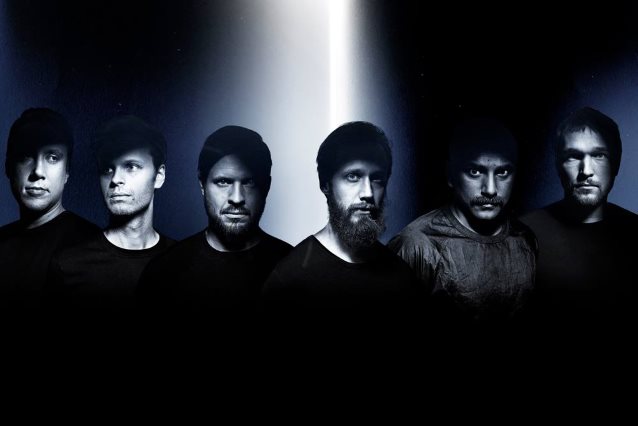
 I’ll be the first to admit that, despite my love for all things heavy and slow, I never quite “got” the niche of post-metal past the more well-known bands’ most well-known albums. Sweden’s Cult of Luna are different, though: Remarkably textured and cinematic in their songwriting abilities, they find a balance of crushing Neurosis-esque sludge and more detailed, introspective territory rooted in post-rock while never succumbing to much of the shoegazing or tendency to dwell on an idea for too long, as many of their contemporaries do. They’ve covered a staggering amount of musical territory in their career, and for their excellence and variety, they’ve earned a place on this column. I present to you The Nine Circles Ov… Cult of Luna.
“The Watchtower” (The Beyond, 2002)
While the band’s self-titled debut was decent (at best), it was really on The Beyond when the band came into their own and started pushing boundaries in their brand of Neurosis homage. Of Cult of Luna’s early years, “The Watchtower” is the type of track that has their identity wrapped up within: From the clanging, grimy bass line to its driving, tempestuous rhythms, it’s a song that got them going in the direction taken on Salvation, and to a lesser extent, Vertikal.
–
“Leave Me Here” (Salvation, 2004)
Even though it acted as a “single” of sorts from the album, “Leave Me Here” is a massive song and substantial improvement over The Beyond. As its dense wall of guitars alternates between melodic chord voicings and crushing Isis-style syncopation, there’s more ambience at work here, something that would come full circle on the band’s succeeding albums. Its quiet middle section builds beautifully into a final climax, and if CoL’s previous album wasn’t solid enough proof, the term “post-metal” is accurately applied here.
–
“Crossing Over” (Salvation, 2004)
Probably one of my favorite CoL tracks ever, this is mostly sparse, coldly introspective ambience, but the songwriting arc is not lost as the band navigate through the tundra of twinkling synths with intricate, almost jazzy drum patterns. The song’s most cathartic moment, is when a gorgeous vocal melody enters toward the end with evocative lyrics, which is then layered upon with echoing screams. It’s a chill-inducing and heart-wrenchingly gorgeous track.
–
“Finland” (Somewhere Along the Highway, 2006)
I included three tracks from this album because, frankly, I think it’s their best work. Departing from the spacey, cold ambience of Salvation, Somewhere Along the Highway sees the band reach into more rustic, earthy sounds and strip their sound to its roots while still pushing into new territory. The climaxes of “Finland” are more desperate and harder-hitting than anything the band had done, but its quiet sections are detailed with shifting hi-hat patterns, gliding e-bow sounds, and delay-soaked guitar vamps that dance atop the throbbing bass lines.
–
“Back to Chapel Town” (Somewhere Along the Highway, 2006)
More rooted in post-rock tendencies, this track build slowly with its jangly, angular chords and rolling drums before introducing a subdued but still ridiculously heavy riff that gives way to a pounding sledgehammer of a verse. For all of its oppressive walls of guitars, though, it still puts most of its focus on the gruff pained vocals and makes room for pulsing synth work about halfway through the track.
–
“And With Her Came the Birds” (Somewhere Along the Highway, 2006)
Arguably the oddball in the band’s entire discography, the halfway marker of Somewhere Along the Highway is a sparse, haunting, and starkly Midwestern-sounding track with its tremmed-out guitars, jangly background organ drones, and, in the latter half, a banjo. Lyrically, it’s also fitting with the visual and aural aesthetic of the album’s remainder, and features some of the most memorable lines penned by the band: “Dead man with pitchfork arms tells me all that he knows.
Leave me here for the crows.”
–
“Ghost Trail” (Eternal Kingdom, 2008)
Eternal Kingdom continued the use of earthy, organic instrument tones from the previous album while also trimming some of the post-rock tendencies from the core songs and relegating them to interludes. Aside from its very intriguing concept and lyrical content, Eternal Kingdom was the most rough-around-the-edges album offered by the Swedes and reveled in its rusty guitar tones and roomy production. “Ghost Trail” is the album’s apex, built upon dynamic shifts in tempo and meter, as well as a gorgeous midsection built upon walls of overlapping guitars. Its massive ending is what takes the cake, though: Starting with a sludgy, earth-scorching riff, it gradually picks up pace and collapses under its own frantic weight. Astounding.
–
“Mire Deep” (Eternal Kingdom, 2008)
While most of the band’s experimental tendencies stayed in the interludes on the album, songs like “Mire Deep” still keep the band’s forward-thinking edge. Its lurching, 6/4 rhythm serves as a foundation for a drilling riff that leaves room for staticy synth work and some auxiliary percussion in its latter half. It pulls back the reins on some of the band’s heavier tendencies, but it works beautifully here and allows them to show the variety within their sound.
–
“In Awe of” (Vertikal, 2013)
Vertikal was a unique album in that it demonstrated the band reaching back into the colder, more desolate sounds of their first two albums while still retaining the grit of Eternal Kingdom and Somewhere Along the Highway. The resulting work was as intensely layered in effect-laden guitars as in nearly industrial synths and electronics, and while I wouldn’t call it their best album, it’s by far the most ambitious. Its penultimate track is starts out deceptively simple before building into an extended instrumental section with layered drum work, walls of achingly gorgeous guitar echoes that bounce off of synth lines, and a climax that juxtaposes glimmering high-end leads against a crushing, memorable rhythm. The song becomes progressively more “detached” over its running time as every instrument starts drowning in a sea of reverb and cymbal washes before reprising its starting section. A stirring, beautifully cinematic feat in songwriting for the band.
–
As with any of our entries in this column, these nine cuts are intended as a starting point only. Cult of Luna have always been a full-album listening experience kind of band, and separating each of these tracks from their respective albums is admittedly an injustice. You know what to do.
– Dustin


Leave a Reply