
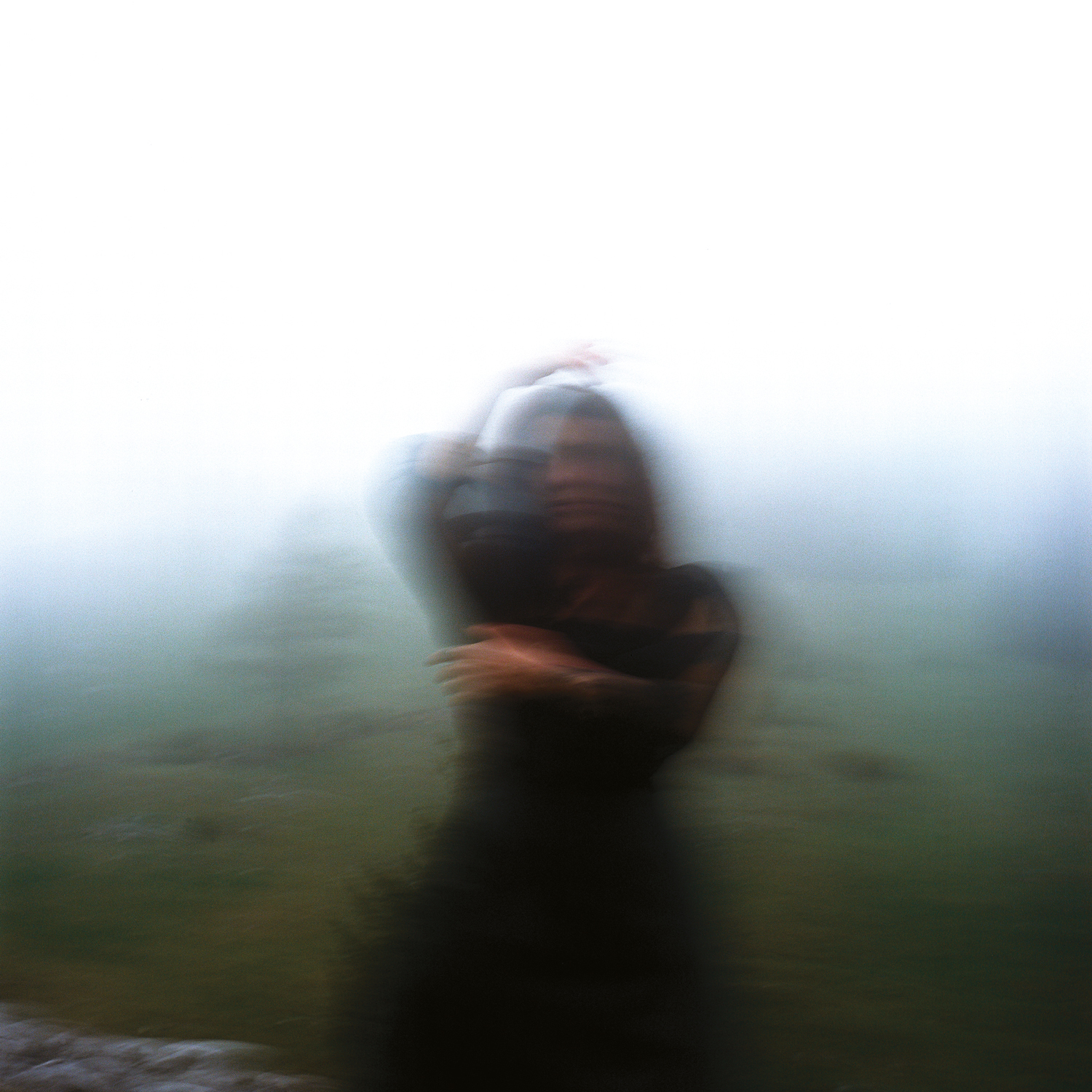

kariti is a name that immediately popped out at me from our planner sheet. It’s been over 3 years since the last kariti release (although, it hasn’t all been radio silence, as you’ll see later), but I remember reviewing Covered Mirrors fondly and being very accepting of its place in my life as a sound that is comforting and familiar. On Dheghom, k. and company push through the trappings of the simple folk that defined her debut and work in some surprising new influences; one that both strengthen the core of the project and also show a significant amount of growth and change over the years intervening.
In case you forgot, kariti is the musical outlet of the enigmatic artist, poet and musician known as k. The origins of kariti began as a way for k. to explore her Slavic heritage through the use of the Church Slavonic language, as well as a way to take her poetry and set it to music to bring new life to it. While it’s been quite a while since we have had a proper release from the project, k. has been anything but idle. Treks across Europe to bring kariti live began almost immediately, and multiple small releases of single tracks have been steady, exploring even more diverse subject like American folk and Nick Cave covers. In addition, an ambient industrial EP released in collaboration with Non Serviam (who also remixed a track off Covered Mirrors) under the name Néant came out last September. All of these diverse influences have been incorporated into kariti’s fold, and the result makes Dheghom stand out from its predecessor in the scope of its sound. Synths, electric guitars, piano and strings play a much heavier role in setting the tone, and there is even a song with a full band playing behind k., which is a first for the outfit. Lyrically, much of what we have is, as usual, layered in mystery. All k. says of the album is this: “Dheghom is an attempt to write about some things I am not necessarily able to understand or even feel, but have a lot of feelings about.”
Dheghom opens in a familiar way; “As Within” begins with k. reading the poem “Son” by Aleksandr Blok set over ambient tones and barely-audible guitar tones. Almost immediately, though, “A Mare Called Night” shifts towards something much less gentle and melancholic and much more Lynchian and unsettling. The haunting synths lie somewhere between 80’s horror and Twin Peaks, and they bring out new facet’s of k.’s voice and poetry that stand apart from what was shown on Covered Mirrors. Similarly, “River of Red” is a post-rock masterclass that crescendos gradually into the aforementioned full band performance that, again, inspires k. to dig into new and previously unventured territory in her vocal delivery. “Emerald Death” has its dirty, bluesy electric guitars washing fuzzed-out tones underneath k.’s stark lamentations on identify and aging (“And you can try to cover/But you can never hide/I am my lover’s lover/I am my mother’s child”). Arguably, though, the centerpiece of Dheghom is “Vilomah,” a duet with the inimitable Dorthea Cottrell. That sound you just heard was Angela’s Spidey Senses tingling, and for good reason. The way their individual vocals, both lilting and deep with emotion, wind together into a funereal ode to loss and pain that is incredibly moving and inspiring.

There is so much expansion and refining that happened on Dheghom that it is hard to believe that it’s the same project I reviewed in 2020. As an artist though, and especially as an artist with as diverse skills as k., growth is both inevitable and vital to survival. As an artist, if you don’t grow, you get left behind, but also, lived experiences are constantly being taken in and refined through one’s own artistic lens, so in that sense, growth will always happen if you let it. Clearly, k. has been embracing the growth, because Dheghom is a huge step forward for her.
— Ian
Dheghom is available now on Lay Bare Recordings. For more information on kariti, visit their Facebook page.


Leave a Reply