
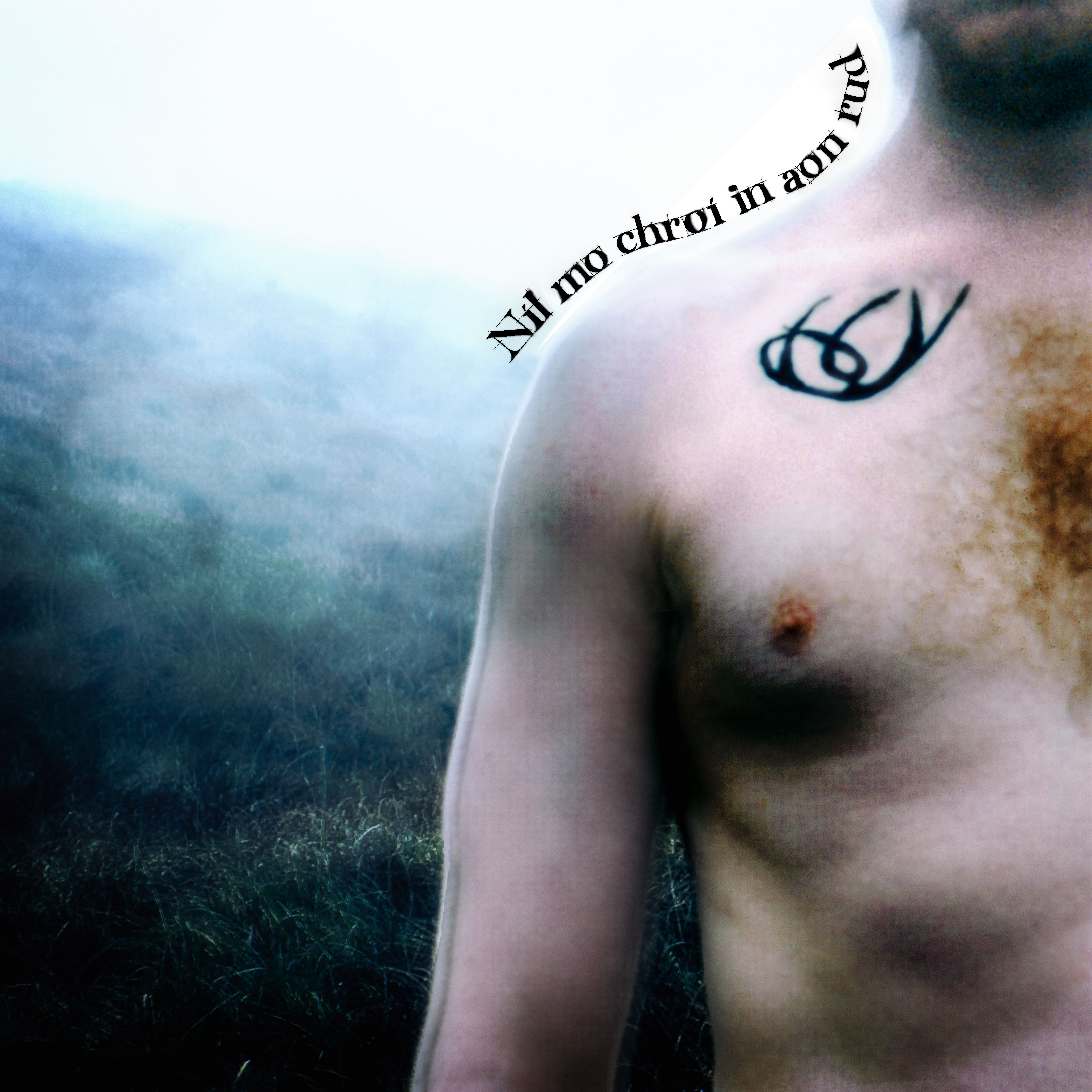

People don’t often realize how much of a struggle it is to keep Irish culture alive, both around the world and even in Ireland, in the face of changing times, good old fashioned colonialism and a world that is increasingly becoming homogenous. Fós are a band that stood out to me immediately on their debut EP Rinne mé iarraidh as wonderfully incorporating traditional Irish culture into a metal context. On their debut full-length Níl mo chroí in aon rud (NEEL muh KREE in ain rud, “My Heart Isn’t In Anything”), the duo doubles down on both the metal and traditional Irish aspects of their music, strengthening the two together.
Musically, Fós is the brainchild of multi-instrumentalist and songwriter Fionn Murray, of Dublin. Murray began Fós as a way to blend modern metal production, instrumentation and songwriting with traditional Irish music, specifically vocal stylings. Fós’ music is particularly inspired by the sean-nós style of singing, where a singer often forgoes rhythm and meter in favor of ornate and mournful melody that is more freeform and story-like in nature. The singer in question on Níl mo chroí in aon rud is newcomer Susan ní Cholmáin, who picks up the torch like an absolute champion and effortlessly weaves her way around this increasingly forgotten style of traditional singing. In addition to highlighting this practice, all the lyrics are in Irish Gaelic and the band very proudly did not use any vocal pitch correction on this album. Of course, none was needed; ní Cholmáin’s voice is strong, tender, emotional and stirring, and her technique and style blend wonderfully with Murray’s crunchy riffs, rousing leads and industrial tinged electronics. On Murray’s side, Níl mo chroí in aon rud focuses more on riffs and song structure, which leads to the eight tracks on Níl mo chroí in aon rud being even more memorable and impactful than those on their previous EP.
And what riffs they are: the musical side of Níl mo chroí in aon rud encompasses the best of drone, doom and industrial metal, all supporting ní Cholmáin’s vocals. Fós have said that there was a greater focus on songwriting this time around, and it definitely shows, but they also perfectly encapsulate, both instrumentally and vocally, the loose and free-form sean-nós style. If you’re looking for a verse/chorus/verse type of album, this isn’t it, but Níl mo chroí in aon rud is something even better than that. It is an album full of song and story, an album that sucks you in and takes you places. The blend of droning guitars, pounding percussion and the lilting vocals is a perfect combination for that wonderful meditative trance I look for in music like this. Lead single “Bádaí na Scadán” is a perfect example of what Níl mo chroí in aon rud is all about. A simple and still downright nasty riff kicks things off, supported ever so subtly by swirling electronics while ní Cholmáin does her thing exquisitely. It’s equal parts hypnotic and crushing, but the overall sense of a story being told through the lyrics and the shifting melody isn’t lost either. Irish music is very heavily based on ballads and laments, and it’s very easy to see that translate over into the mournful, soul-stirring performances here. For my money, it doesn’t get much better than “Slán le Maigh,” which embraces every facet of what “post-metal” can be, from lumbering, formless guitar drones to ethereal lead work, all capped off by some of the most gorgeous singing I’ve heard in a long time.

There really is no other band out there anything like Fós. You owe it to yourself to experience what they are all about, especially if you’re like me and Irish culture is a huge part of you. There is a wistful, blissfully homesick feeling that Níl mo chroí in aon rud fills me with that can’t be replicated by anything else.
Slán go fóill.
—-Ian
Níl mo chroí in aon rud is available now on Fiadh Productions and the band’s Bandcamp page. For more information on Fós, visit their Facebook page.

Leave a Reply