
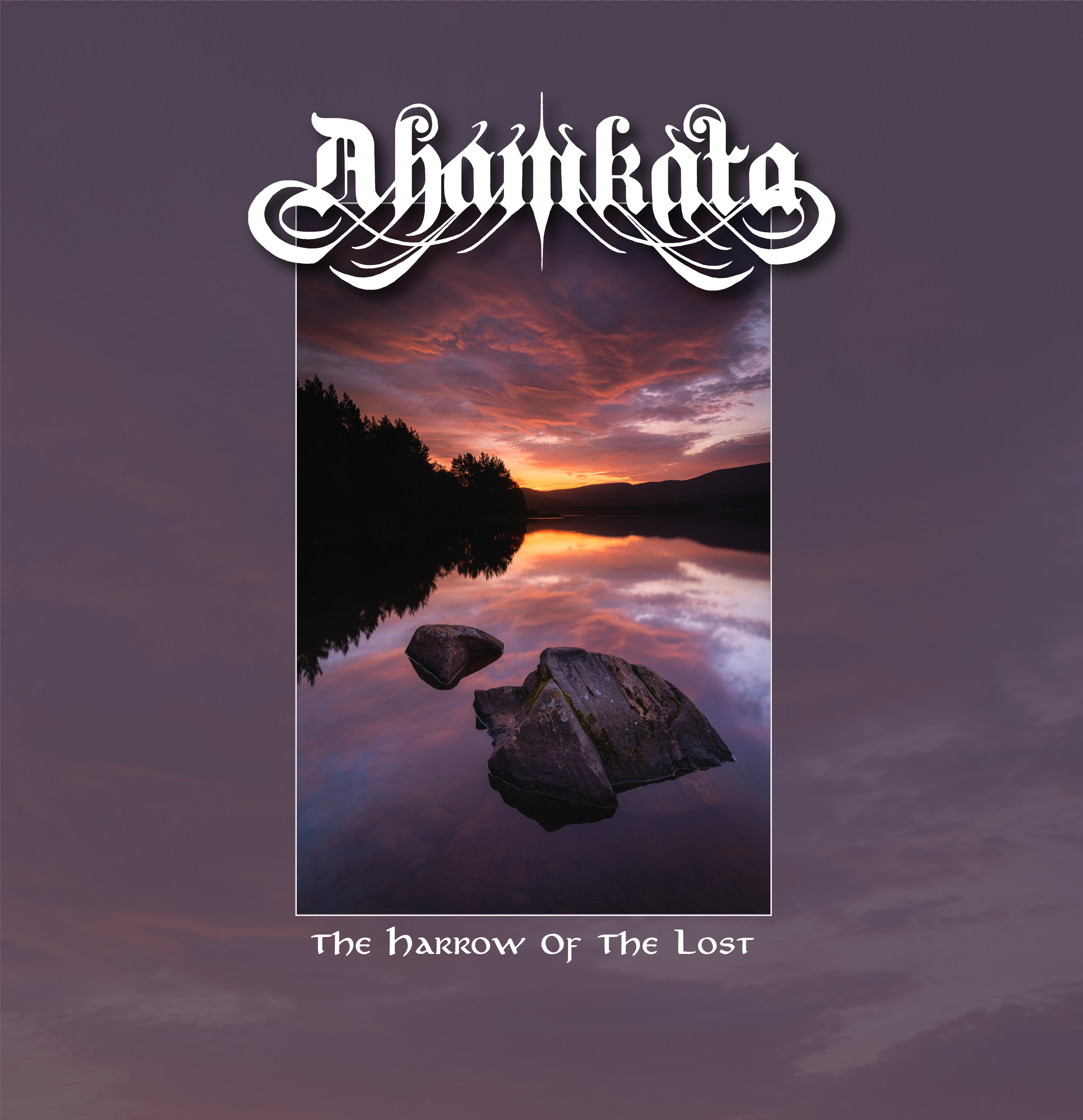

Grief is a funny thing. Grief takes time, grief takes space, grief takes work, and even then it’s the kind of thing that never truly leaves your system. It changes you, it leaves its mark on you and the only way to truly deal with it is to move forward regardless and in spite of all that. Ahamkara are a perfect example of this truth in action; The Harrow of the Lost is a sophomore release ten years in the making, due to and heavily influenced by the death of founding vocalist Steven Black.
Almost a full decade after the release of The Embers of the Stars, Ahamkara surprised the metal world with the announcement of a reformed lineup and a brand new release, featuring none other than Mr. Austin Lunn himself on drums and Alexandra Blenkarn-Durning (of Nemorous) on synths with founder Michael Blenkarn taking over vocal duties in addition to guitar. Obviously, The Harrow of the Lost is an album that explores grief and bereavement in all of its highs and (mostly) lows, and the highly evocative and melodic style of black metal the trio explores hits every facet and nuance of the process. Equally influenced by Cascadian acts like Agalloch and Wolves in the Throne Room as they are by Emperor and Bathory, the four tracks on The Harrow of the Lost rip and blaze their way through furious rage, aching melancholy, and subtle acceptance. For those worried, it follows the sound palette of The Embers of the Stars pretty closely, albeit this time the band wanted to incorporate more raw and organic sounds. I believe in this respect they have succeeded, although the changes in production are pretty subtle. It does sound like they have picked up exactly where they left off.
Alright, let’s get it out of the way now; everyone knows I’m a top-tier Austin Lunn stan, but even I don’t want to have the rest of this review spent only throwing praise his way. I do feel compelled to say that, for all the instruments he plays phenomenally, I think his drumming is the best thing he does, and he lays down a monster performance here that rivals any featured spot or release he has put out. The musicality of his fills, the nuance of his playing and his sheer technicality never fail to leave my jaw on the floor, and it all perfectly compliments what the rest of the band offers up. Michael Blenkarn’s vocals are eerily similar to Black’s, probably by design, but it’s a necessary throughline that connects Mark 1 of the band from ten years ago with this new, revitalised lineup, and he absolutely knocks it out of the park. His vocals are haunting and raw, and his guitar playing (and bass playing, because he also crushes it there as well) hasn’t lost a step, and he knows his way around melodic lines that are somber and moving but still touch the home base of that Norwegian first wave. The good bands, anyway. Similarly, Blenkarn-Durning’s synths add a lot of subtle texture behind the wall of tremolo picked guitars and blast beats. They are most prominent when the song breaks down into the requisite clean section (which happen to be some of my favorite moments on the album), but when they pop they add some sparkle and lighten up tracks that could run into the problem of being too heavy. Honestly, my biggest complaint with The Harrow of the Lost is that I wish there were *more* synths! They’re an underused instrument in black metal in general, and Blenkarn-Durning clearly knows how to make them effective in the setting. “Our Scars Shall Abide in the Thaw” is kind of the perfect encapsulation of everything this album does extremely well: killer drum performance, catchy and expressive guitar lines, delicate clean section with great melodic articulation from guitars and synths, and keyboard washes to take us home.

I almost want to say that I wish it hadn’t taken a death to make The Harrow of the Lost happen, even ten years later, but I also think you can’t remove it from the circumstances that shaped its formation. It is what it is precisely because of the grief and loss and sorrow that brought it forth, and it wouldn’t be right to make it anything less than that. Still, The Harrow of the Lost goes beyond simple circumstances; it’s an album that is triumphant in its stature, and it’s a testament to the legacy of a band that could have been written-off, quite unfairly, as a one-and-done project. Here’s to more in the future, whenever the time is right for it.
— Ian
The Harrow of the Lost will be available April 25 on Bindrune Recordings. For more information on Ahamkara, visit their Facebook page.



Leave a Reply to Album Review: Nemorous – “What Remains When Hope Has Failed”Cancel reply