
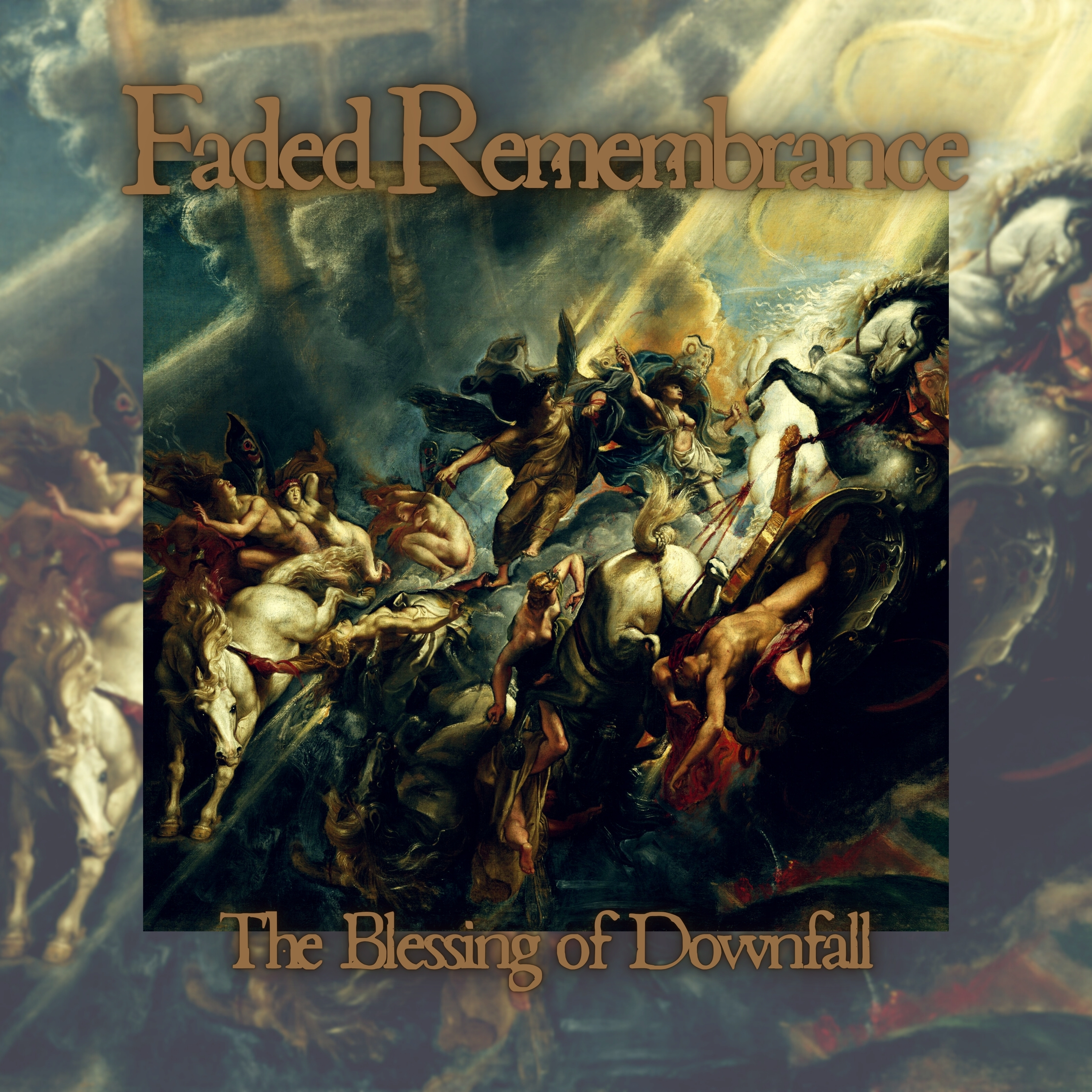
When looking for a good story, one doesn’t tend to look towards albums to get one (unless it’s a concept album, which, in that case, you will be looking for a bigger cast). However, albums can sometimes surprise you and can have an excellent story. We are returning to the pits of the metal campfire story (you can see what I mean by that here) with Hungarian one-man project Faded Remembrance’s newest full-length, The Blessing of Downfall.
The Blessing of Downfall starts with its title track, a song that introduces a majestic-sounding atmosphere filled with sounds like horns and synths heralding the coming of something new. The start to this album is in media res, and you, the listener, are the passive observer that just happens to arrive as the plot begins – at the end. It’s a eulogy to what occurred prior to your arrival, and you can’t help but be extremely confused as you wonder why there’s a sense of hope underneath the bleakness of the horns. However, that hope quickly dissipates with the start of “Shadowhaunt,” a song that not only ups the tempo of the previous track, but is bleaker and colder in comparison. Underneath the merriment, there’s a sense of coldness and dread that comes with adapting to downfall. However, you are soothed by the stories someone else tells, of other places that have experienced their own versions of downfall and how they were able to rebuild. From the stories surrounding King Arthur (“At the Gates of Avalon”) to how your actions may have consequences for everyone (“Pride Far Gone”), Faded Remembrance takes the time to immerse the listener into hearing about these stories, making them understand that, even though they are characters, they are also analogues to our story. In a rather roundabout hopeful way the album’s main takeaway is that we can always adapt to new experiences no matter how scared we are. We have already arrived at the end of several things across millennia; why should we be afraid of another looming disaster?
The music also echoes this sentiment as throughout the album, the dynamics shift from bleak to hopeful within the scope of each track. The horns and synths also help break the music’s monotony, as if the speaker takes their time to break into a non-sequitur to everyone else invested. After all, these are lengthy tracks ranging from five to seven minutes so it’s important to have sound cues that allow the listener to understand when something changes or how a certain point was made. The vocals also add to this dynamic, shifting from oratory to moving at any given moment. You, as both music and story listener, can only be astounded by what you are hearing: an epic story composed of different parts accompanied by music that reminds you of Summoning. I am not sure if that was the intention Faded Remembrance had when coming up with this idea, but I like to think that they might have been inspired by the way “epic” black metal bands handle both their music and their stories.
Now, despite my praise, there’s something about this album that falls short. While I understand this album may be following the aesthetics and the sonic blueprint set forth by its genre progenitors (i.e. Paradise Lost’s Gothic), I don’t think the pacing works for an album that has a 56-minute runtime. If you are here for the music, you will get lost easily and feel like you have been listening to the same track for 25 minutes. The music is also slow, a proto-black metal-esque album that fringes on the side of drone. It’s only on sixth track “Requiem” where The Blessing of Downfall wakes from its slumber, as the trumpet and the synths become more dynamic and the music “awakens,” becoming more of the death-doom I am familiar with. That track is the highlight of this album, something rewarding after the glacial pacing of its structure. However, then it goes back to the drone-like nature, and I immediately wanted for more of “Requiem.” The Blessings of Downfall may have a story to tell – the falls of civilizations and how that has affected the way humans perceive their changing fortunes, how fate is tightly intertwined with the decisions we make – but the music’s nature surely doesn’t help. If you are going to use instruments like trumpets and synths in your music, the least you can do is have them become part of the instrumentation instead of throwing them out like a light amidst a sea of gray.

Personally, I didn’t think I would have a lot to say about The Blessing of Downfall, but the more I listened to it, the more I found myself invested in its campfire story aesthetic and musical decisions. While this may not be the kind of death-doom I am into, I appreciate Faded Remembrance’s commitment to composing a lengthy album that tells a story about human resilience and survival. I also appreciate the work that went into creating what I like to call an “atmospheric death-doom epic” – an oral story that works due to the aesthetics set by its genre progenitors. While this may not be for me, I think those who like the majestic and ethereal leaning of the “epic” version of genres may be inclined to give this a go. Come for the music, stay for the campfire stories and the camaraderie shared amongst survivors.
— Hera
The Blessing of Downfall is available now on Bitume Prods. For more information on Faded Remembrance, please visit their official Facebook and Instagram pages.


Leave a Reply