
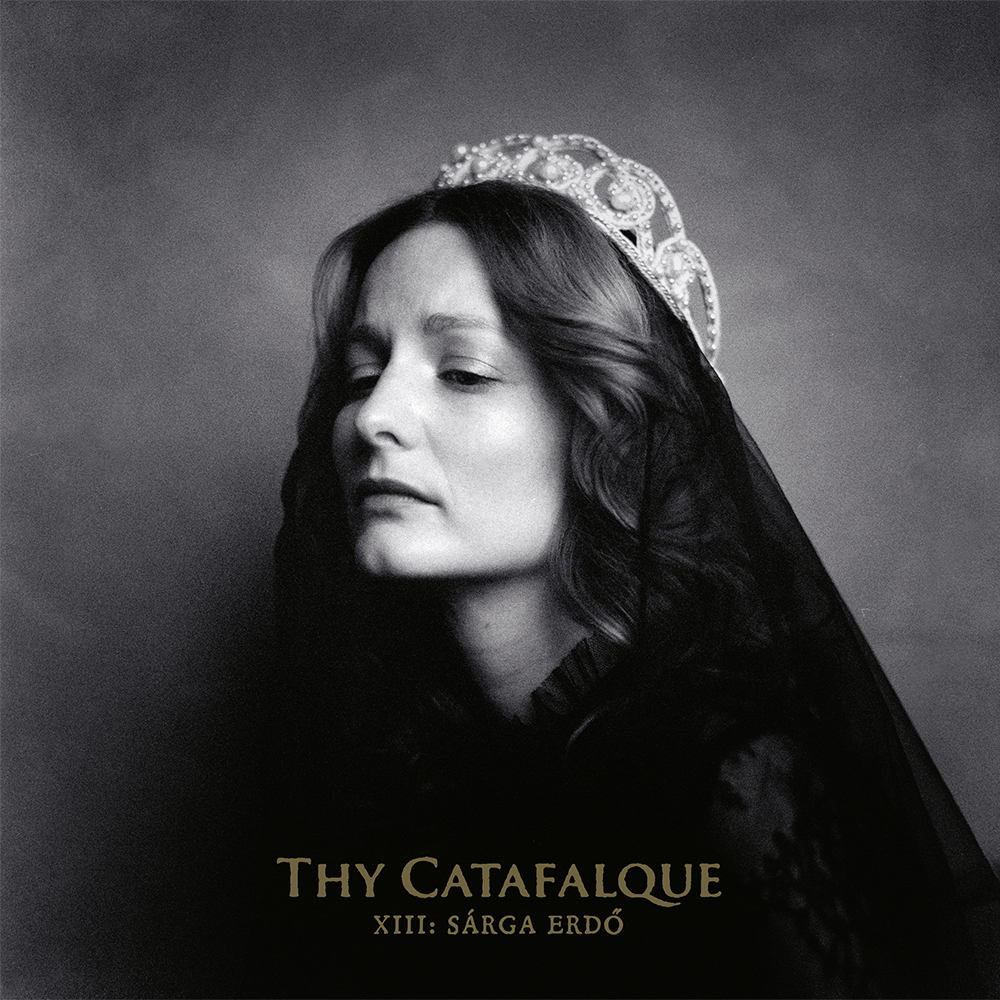
The weather is turning and after surviving what felt like a brutal summer, we are now rewarded with cooler, rainy weather. The days are shorter, and we are seeking refuge in the comfort of the dark and cozy. In a sense, that’s also what Thy Catafalque has been doing, and their newest full-length, XIII: Sárga Erdo (Sárga Erdo), showcases a stranger aspect to their overt avant-garde sound and aesthetics.
That’s right: we have reached lucky number 13, and you bet this album has a much different vibe than 2024’s XII: A Gyönyörü Álmok Ezután Jönnek (Ezután Jönnek).
One of the first things to land about Sárga Erdo is how restrained it is. In a sense, Sárga Erdo is the antithesis to Ezután Jönnek, which is something I wouldn’t otherwise mention if not for the stark contrast between both albums. In past conversations regarding Ezután Jönnek, the album is about home and what it means to those who use the word in various ways. Home is a tether, a place you can return to even if that home physically doesn’t exist anymore. It’s something larger-than-life, encompassing a sense of joy and wonder that comes with memory and nostalgia. Sárga Erdo, however, feels untethered. It’s an album that feels like barreling down to the deep end and getting lost within the deeper parts of a forest. This lack of tether means that Sárga Erdo has no themes that tie it together – it’s less of a concept and more of what feels like sitting down with friends as they tell you stories around a campfire. It transitions between and in between tracks, ideas and sounds shifting from one aspect to the next. Think of the structure around classical compositions: each section is a movement, so when the track changes in tone or a new instrument is introduced, that’s the start of a new movement.
Sárga Erdo is also a tonally darker album than Ezután Jönnek. It makes that album seem brighter in comparison, and while it contains moments of levity, Sárga Erdo has more of a straightforward black metal aspect to it that I haven’t heard since either Alföld or Rengeteg. Sárga Erdo is also pulling from Thy Catafalque’s previous albums, such as the atmosphere from Tűnő idő tárlat and the density of Alföld. Perhaps it’s the way the instruments are used and it gives the music a haunted feeling. Perhaps it’s the way that the music sounds folkier than in Ezután Jönnek, weaved with a primal recognition that what you are hearing is supposed to evoke dread and maybe fear. There’s a lot of duality happening on Sárga Erdo – the soft, ethereal melodies on some tracks balance the overt black metal tones on songs like “Puszta” and “Búcsú a piros madártól,” creating this beautiful dichotomy of sound that simultaneously pulls at you but also makes you want to stand up and run the other way. I’ve never had the idea to fear an album outside of how emotionally devasting it can be, but Sárga Erdo sits in a strange headspace where you are grappling with loss – you just have no idea what it was.

We are clearly hearing Tamás Kátai and his collective cast of musicians tell various campfire stories in real time, embedded with some of the most intricate musical shifts this side of the continent. It has a little of everything: the echoes of nighttime soundscapes in “Dunnák alatt kék mező” that may or not be a reference of Neolunar; choirs that remind me of “Aláhullás,” but with more restraint; opera singing whose vocals are familiar yet strange and have buried themselves in your brain; and horns, strings, and bells that give off a sense of mysticism and worship. Sárga Erdo is probably the truest and most honest Kátai has been with his music, each of his albums more fantastical and weirder than the last. While Sárga Erdo doesn’t have the joy Ezután Jönnek had, there’s still joy to be found within the starkness of its music.
— Hera
XIII: Sárga Erdo is available now on Season of Mist. For more information on Thy Catafalque, visit their official Facebook and Instagram.
Leave a Reply