
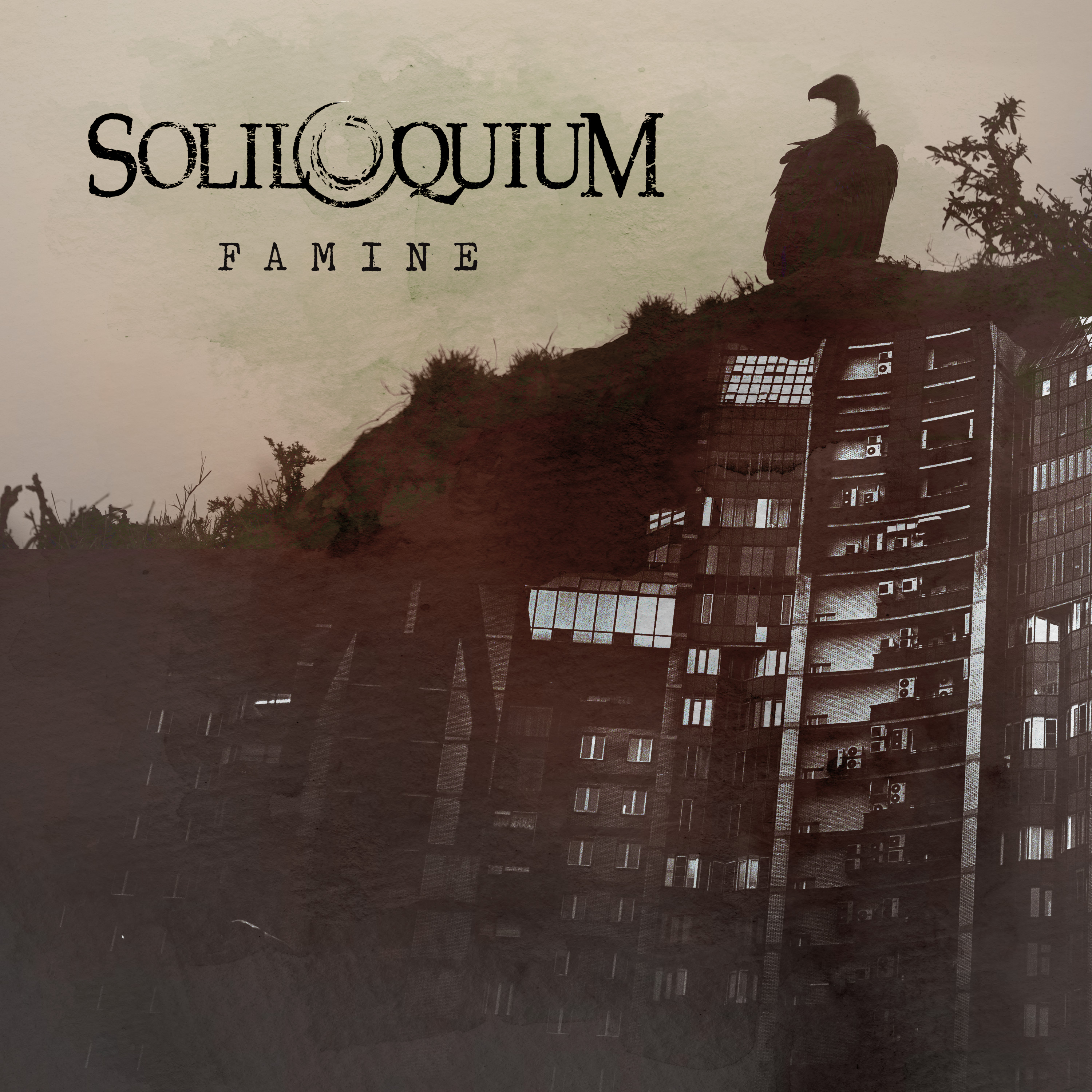

Five years ago, I reviewed Soliloquium’s third album, Things We Leave Behind, an album that I enjoyed, but did have some minor issues with it. Since then, I had lost track of what the band was doing. Now, the band has graced us with their newest release, Famine, an album that seems to close a chapter filled with turbulence and darkness, with the intention of looking forward to new beginnings.
Before starting the review proper, I wanted to highlight that this album is about main vocalist Stefan Nordström’s reflections and headspace between 2020 and 2021, a period he describes as “pure abyssal hopelessness” that he felt he needed to conceptualize and then move on. According to Nordström, this album represents a more cathartic side to the band’s music, one that isn’t meant to be comfortable (source). It’s supposed to be hopeless and disharmonious and from an initial impression, Soliloquium has achieved that goal.
First track “Famine” sounds like an old song given new life, as if Soliloquium used an established motif and combined it with a new sound to give the track some depth. Nordström outright states that this song was inspired by Katatonia’s EP Sounds of Decay, but also wanted to introduce a more desperate and cathartic direction he saw in bands like Amenra and The Ocean. This is not supposed to be an easy listen and it shows – “Famine” creates a barrier to entry steeped in catharsis (source), and it also doesn’t sound as pretty as second track “2 A.M.”, a more traditional death-doom song. “Famine” jumps out at you, demanding you pay attention before you are able to listen to the rest of the album. Your reward for listening to “Famine” is the aforementioned “2 A.M.,” a song that showcases growth in the band’s sound. While they clearly wear their influences on their sleeve, “2 A.M.” is a step towards new directions in death-doom. The music is progressive, dark, and reflective, carrying a sense of grief that has finally been addressed. It’s on this track that you begin to see a sort of timeframe being outlined – a man before and after he has worked through the grief. While one could have theories as to where each track is placed within this timeframe, Famine does its best to place the listener in the present, watching these events unfold as they come into view.
As the album continues, the band begins to gain an affinity for new sonic influences. While Famine is deeply rooted in death-doom, Soliloquium doesn’t hesitate to add a flair of post-metal and a hint of melody that heavily reminds me of Hanging Garden. This is best highlighted on “Själamörker,” a track sung entirely in Swedish, and whose main melodic line has some groove in it. Despite its inherent darker tone, the music moves seamlessly, shifting between the quieter moments where the vocals are cleaner and you can hear chanting and the overt harsher atmosphere where the vocals scream at you regarding the loneliness and anger the speaker has felt. After “Själamörker,” Famine fully becomes a melodic death-doom record, utilizing more clean vocals and having more reflective moments that speak of moving away from grief. For example, the track “Vigil” has a quiet start composed of what sounds like piano before the vocals kick in. Even when the music changes from death to doom and back, the vocals remain clean, poignant, and emotional. It feels like mourning, like crying for something that has happened, but you are barely in the process of starting to deal with it. It’s at the end of the album where our speaker comes to terms with what has happened and there’s nothing he can do except move on.

Famine is a difficult listen – it feels like something you shouldn’t have witnessed or listened to. It’s as if you pried into someone’s most vulnerable moment, but they still invited you to sit with them. Nonetheless, this album shows the band’s maturity and ability to create music that resonates. While it might be filled with a certain amount of misery, it’s authentic to Nordström’s life experiences, and what better way to show that than on a death-doom record?
— Hera
Famine is available now on Meuse Music Records. For more information on Soliloquium, visit their official Facebook and Instagram pages.


Leave a Reply