
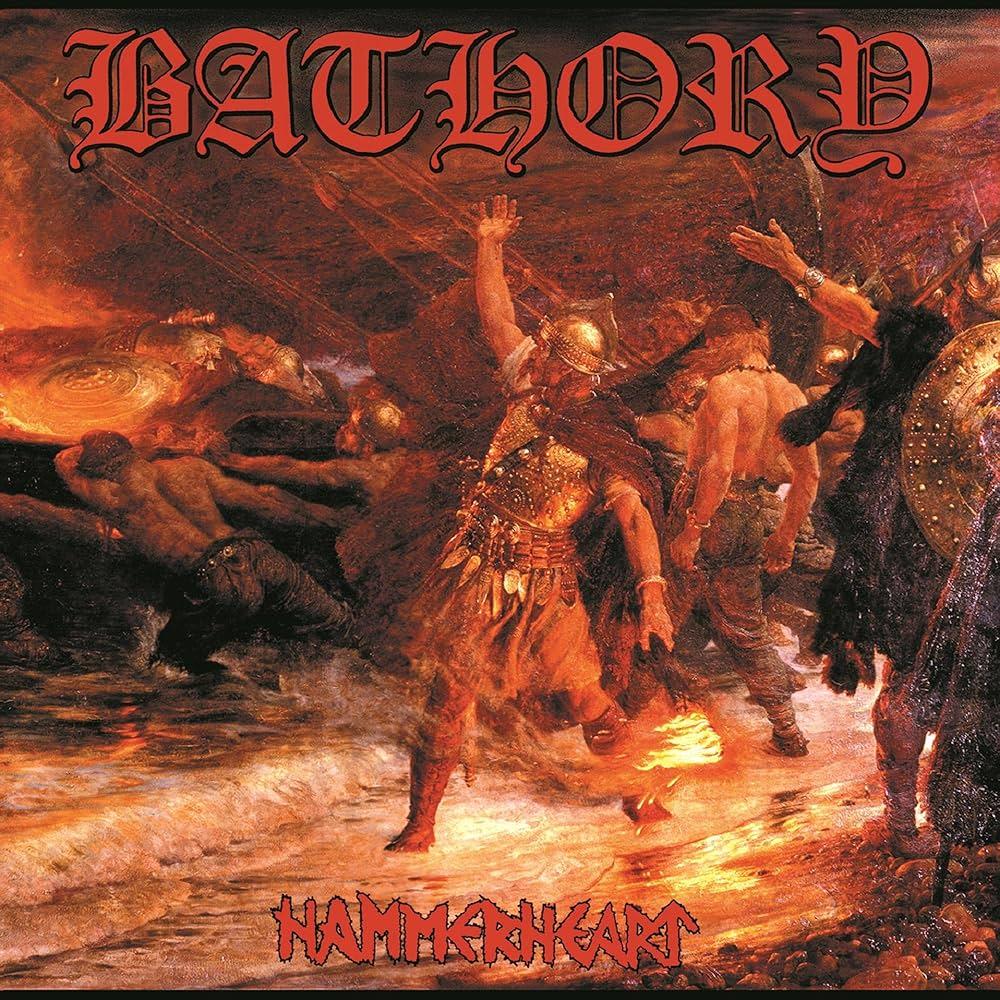

In the history of black metal there is naturally one band that stands above all others in terms of influence and impact on the formation and proliferation of the genre: Sweden’s Bathory. From the raw, thrashy proto-black of the self-titled debut to the mythologically-focused epics of Twilight of the Gods and beyond, Quorthon was heavily responsible for not just the inception of black metal, but for introducing themes and history from Norse mythology and the viking age to the genre (as well as being an early one-man band, a trait which of course still continues today). Among all the celebrated albums in the Bathory discography, there’s one that stands head and shoulders above the rest in my mind: 1990’s Hammerheart. Growing from seeds first sown in the two preceding releases, this album largely abandoned the black metal trail Quorthon had already blazed in favor of something new, creating an entirely new genre (arguably) in the process. In celebration of the 35th anniversary of its release today, let’s revisit this imperfectly perfect album that is the finest in Quorthon’s saga.
If you ask five different Bathory fans what their best album is you’re likely to get five different answers, but if there’s any consensus 1988’s Blood Fire Death seems to oft be considered the best. My hot take is that the album is pretty overrated — while the bookends of openers “Odens Ride Over Nordland”/”A Fine Day to Die” and the closing title track are some of the best songs Quorthon ever recorded, the middle of the album is lackluster even for first wave black metal standards. I’m not a huge first wave guy anyways, but Under the Sign of the Black Mark did all of that much better. With the phenomenally epic nature of “Odens Ride” and acoustic guitar-laden, slower, more gradual progression on the aforementioned tracks Quorthon would set the stage for something new that would ultimately materialize on Hammerheart; a subgenre that would come to be known as “viking metal.” Real Bathory heads know that Quorthon had recorded a good chunk of what would become 1996’s Blood on Ice prior to Hammerheart, but I’ll gloss over that here.
Genre debates can of course get tedious, but I enjoy having them and will defend the existence of viking metal using this album as the inception point. It’s hard to classify Hammerheart as black metal even in the genre’s earlier forms; it may share production qualities and a great sense of atmosphere, but there’s little-to-no riff or vocal similarities. There’s a case for calling the album doom as many of its riffs are more in that vein (Russian band Scald would tip that knife’s edge over to doom with their 1996 debut Will of the Gods is Great Power), but that description doesn’t quite fit as well. It’s not quite folk metal either based on the instrumentation, although folklore and folk music are obviously a major inspiration. Hammerheart is simply viking metal. Of course this term would come to lose most of its original meaning and encompass all matter of viking and Norse mythology-themed bands (regardless of folk musical influence) — from Amon Amarth to Ensiferum to Unleashed — so perhaps trying to “reclaim” the term is a bit of a lost cause, but I will do my best to defend the best description of it. This original iteration of the genre has seen some bands to a great job of replicating it, even if none hold a candle to Hammerheart: Falkenbach, the early work of Ereb Altor, and very recently Bronze Hall (I’m sure you’ll be hearing more from me about that album by years end). Soon however, Enslaved, Windir and others would quickly carry the “viking” elements into more blackened realms. Naturally, the genre term itself carries some baggage that I feel is appropriate to address.
Viking history and culture in conjunction with Norse mythology has obviously seen a resurgence over the past few decades. Movies, tv shows, video games, and of course music; metal being a major component along with “metal-adjacent” Nordic folk acts like Wardruna and Heilung. Obviously this isn’t all great with the ties that paganism and “viking” aesthetics have with Wotanism/Völkism/etc. — and the few words we can still find on how Quorthon spoke related to the subject don’t exactly portray him as having the best views (something that I think should still be acknowledged even if he’s long gone) — but the desire for something both pre- and anti-Christian is indubitably a core principle in the origin of black metal that was well-exploited on Hammerheart and its thematic successors. Wth the faux-Christian freaks currently trying to dismantle the USA as we know it, this type of material feels all too cathartic right now in 2025. As corny as it may be to some, the triumphant final words sung on “One Rode to Asa Bay,” “It’s only… just begun!” really carry some weight to them (or at least it did to a number of young men in Norway only a few years after the release of this album). That’s a lot of words just to set up this album and the genre it originated, so let’s get on with it and dive into the magic of Hammerheart itself.
Right from the ascending chords and clean(-ish) vocals that open “Shores in Flames” it’s clear Quorthon was following a new path, one of grandiose, archaic atmosphere complemented by slow, chunky, palm-muted riffs that feel like the soundtrack to the rowing of longship oars; a far cry from the intense, speedy thrashiness that had exemplified his earlier material. Gone too were the evil screams and rasps, replaced by off-kilter shouts that were certainly far from perfect, but at least had a gruff melody to them. The other biggest addition in the vocal department would of course be the backing choral vocals — also courtesy of Quorthon — to add that extra layer of epic, as if the Aesir were calling through to us on Midgard themselves. Bathory being Bathory however, there was no way Quorthon’s face melting shred solos would be going away, and they’re used to perfect effect on Hammerheart, guiding tracks like “Baptized in Fire and Ice” from crushing riffs to grand vocal melodies.
What makes this album stand out amongst the rest of the Bathory discography is the Goldilocks zone it occupies within it; less blackened and raw than Blood Fire Death, and not as refined in both vocal quality and sound production than Twilight of the Gods, but a perfect balance between the two. Quorthon had completely stepped up his vocal game on Twilight — and that album is #2 in the Bathory pantheon for me — but the same caliber of vocal performance and overall sound would detract from the unrefined charm of Hammerheart. The riffage here is more primitive and chuggy than would appear on subsequent Bathory releases in the viking metal vein like Twilight and the two Nordland albums, but this gives the vocals and keys more room to fill out the melodic and folk-inspired aspects of the sound. Like Blood Fire Death the best tracks are at the bookends, but Hammerheart is pure bangers all the way through. Expertly paced, with the one-two punch of “Shores in Flames” and “Valhalla” that set the stage for what Quorthon was working with, the more energetic, drum-pounding intensity of “Baptized in Fire and Ice” and chorus-heavy “Father to Son,” up through to the folk interlude “Song to Hall Up High” that precedes the massive chords of “Home of Once Brave”… all leading up to the triumphant closer “One Rode to Asa Bay” that is the ultimate culmination of what Hammerheart is all about: unpolished vocals, ripping guitar solos, and thunderous riffs all wrapped in an epic atmosphere fit for the gods.
Funnily enough, I fell in love with black metal long before I got into Bathory — my views on a lot of first wave material had me disliking even the most acclaimed albums, including Hammerheart — but eventually this album clicked with me. A masterpiece of pagan magic that has never come close to being replicated, and has been one of my all-time favorites for over a decade, and without which my favorite band would not exist (not to mention the namesake for the best brewery in the world). See the hammer way up high, raise your fist to the air, and feel the powers of Hammerheart all within.
— Colin
Since the death of Quorthon in 2004 and his father Börje “Boss” Forsberg in 2017, it seems like there’s nothing truly official from Bathory anymore. However, you can find an (incomplete) archived version of the official website here.


Leave a Reply