
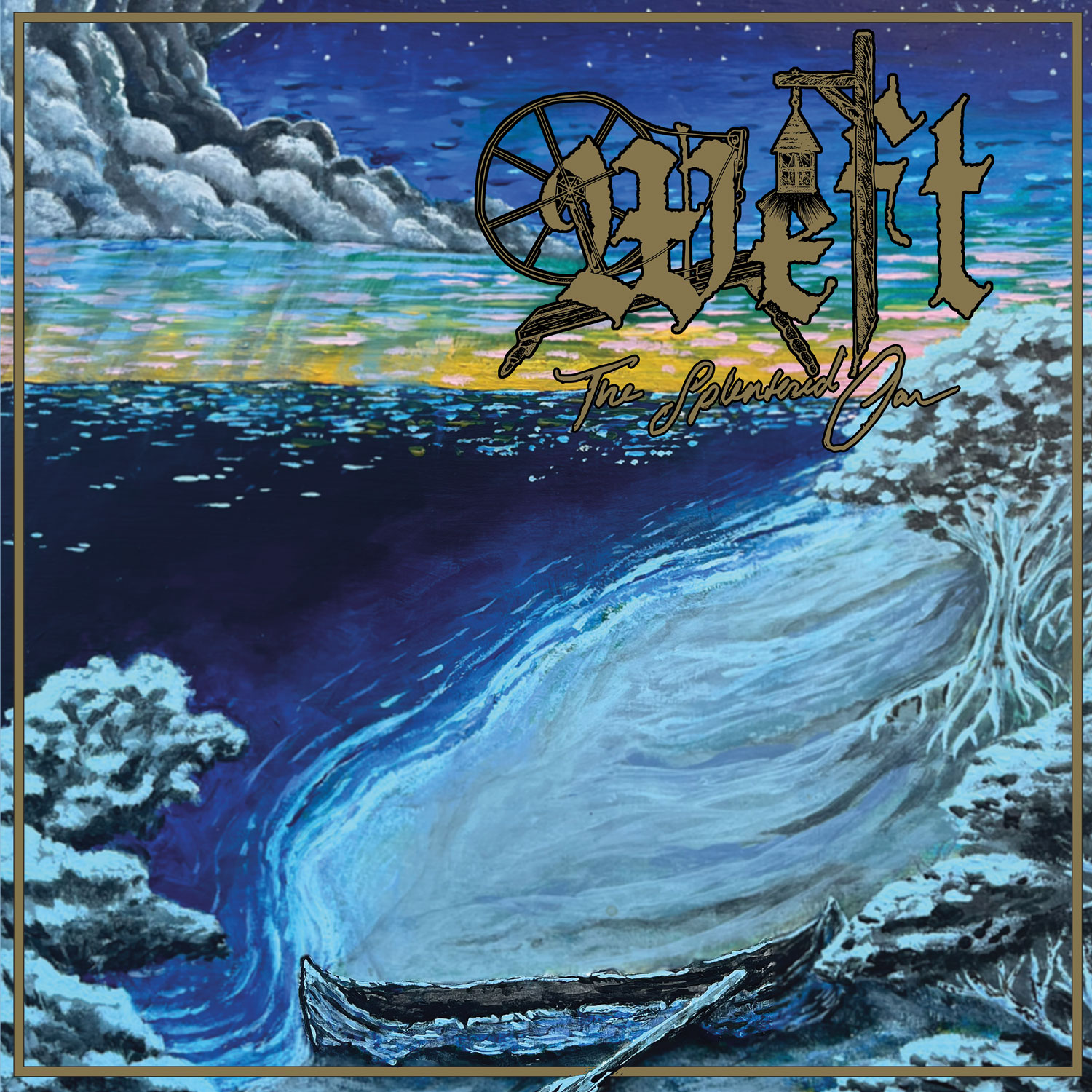

If you’re not familiar with the name Charlie Anderson by now, it’s best you get acquainted. Already known by those with great taste as the missing ingredient to Panopticon’s live sound — bringing the band from great to top-tier with his incredible violin playing, as well as being a major contributor to nearly every Panopticon release since …and Again into the Light — the Houston native is finally at the helm of his own solo project in Weft. His debut album The Splintered Oar is an exquisitely crafted fusion of black, death, and prog metal made whole with Anderson’s own violin playing and a range of folk influences. The end result is both a tremendous metal record on its face, and an authentic experience in both sound and composition that already puts Weft close to some of the best acts in truly American metal.
As much as I love to use genres to describe and discuss albums, like a lot of the best metal Weft cannot easily fit into one or two categories. Pounding grooves reminiscent of viking-era Bathory, a choir accompanying blast beats in a manner not too far removed from Emperor (these two classic sounds ushering in the first metal on the record in an epic fashion with “False Kingdoms”), octave-jumping bass lines and syncopated chugging that wouldn’t be out of place on an Opeth record. These influences are apparent enough, but to say that The Splintered Oar is something you’ve already heard before couldn’t be further from the truth. The amalgamation of influences and sounds showcased by Anderson on the album represent his journey to get here and who he is as a musician, and he gathered some of his closest friends to assist him in realizing his vision.
Unsurprisingly, the drums are performed by Austin Lunn, impeccable as always; whether blasting in 7/8, accompanying the aforementioned grooves with appropriately crushing beats, or even donning brushes in some of the softer moments, Lunn gives it his all. Andrea Morgan (Exulansis, The Keening) — an incredible violinist and vocalist in her own right — sets the stage with Anderson on the haunting instrumental opener “Falling Leaves,” and contributes further strings and vocals on “The Hull” and “Dream of Oaks.” Her performance in the latter was described by someone in the Bandcamp listening party for the album as very Amy Lee, and that’s a pretty spot-on description! This track is also opened by close friend (and the man responsible for bringing Anderson and Austin Lunn together) Jordan Day, whose unique voice introduces a distinctly southern flair. The Splintered Oar wouldn’t be the album that it is without the contributions of these three musicians, but ultimately this is Charlie Anderson’s project. His songwriting abilities and musical instincts are the heart and soul of this album.
Already being familiar with Anderson’s violin playing from both his recorded contributions and the number of times I’ve seen Panopticon live I was expecting some killer violin playing on The Splintered Oar, and Charlie delivers 100% in this regard. Violin leads that soar above and around the four- and six-string riffs, shredding solos on electric violin; and this is just the tip of the iceberg. But I was blown away by the other aspects of his performance, vocals in particular. The grand choir in the first metal section of “False Kingdoms” that I mentioned earlier, layered, somber cleans in “The Hull” that characterize the literal calm before the storm (more on that later), but it’s Anderson’s harsh vocals that steal the show. Deep, Åkerfeldt-ian growls, blackened screams, and most notably a banshee shriek in “Red Dawn” that is such a throat shredder I wouldn’t be surprised if there was no possibility for future Weft material on account of ruined vocal chords. The riffs on The Splintered Oar typically thread the needle between black and death metal in a truly progressive fashion, from Opeth-ian chords to furious trem picking in the epic finales of both “The Hull” and “Dream of Oaks;” the latter even has a fantastic funeral doom section before said finale.
True and personal as the musical aspects of The Splintered Oar are, so too are the lyrical and thematic elements. Anderson was raised on the southern shore of Texas and the album is a tribute to those roots, but not always assessing them in a positive light. “The Hull” and “Red Dawn” are pointed references to the 1900 Galveston hurricane that destroyed the city (and is still the deadliest natural disaster in US history), framing this tragedy as the result of settler hubris resulting from both the extermination of the indigenous tribes and the ecological destruction intrinsic to capitalist development. The epic, discordant finale of “The Hull” does an incredible job of personifying this hubris as the music takes the form of the storm itself.
Like the southern shore he was raised on, so too does the music of The Splintered Oar ebb and flow with impeccable pacing. Twangy slide guitar turned devastating riffage on “False Kingdoms,” harmonizing violins backed by blast beats into dreamy, synth-forward prog and back on “The Hull,” and so much more. On top of everything else mentioned thus far, Charlie Anderson mixed the album himself (with mastering completed by Panopticon staple Spenser Morris). The Splintered Oar has a rougher, near-demo quality to it but this is 100% intentional, and is ultimately a major factor in why I love this album; Anderson relied on zero sampling and quantizing, with all performances being totally real.

There’s many more positive things I could say about The Splintered Oar, but I think what’s most important is its authenticity in production, performances, and theme. This album is a love letter to a number of things — Anderson’s coastal Texas roots (the good and the bad), the classic works of Bathory, Opeth, Emperor, and more — but most importantly it’s a celebration and expression of deep bonds between some incredible musicians. There’s no universe in which Austin Lunn doesn’t play the drums on this album, or Andrea Morgan and Jordan Day do not have guest spots; these songs were constructed with all of them specifically in mind, and that’s in large part what sets The Splintered Oar apart from its peers. It’s one thing to have a great session performance that elevates an album, or get a band that gels pretty well together and have them crank out some solid tunes every few years; it’s another for the stars to align in just the right way where true musical soulmates find each other. That’s the language Charlie himself has used to characterize the relationships between himself and the other musicians featured on this album, and it really shows… The Splintered Oar is a true work of the heart, one that puts Weft at the same level of modern-day legends such as Panopticon and Wayfarer in the pantheon of authentic American metal.
— Colin
The Splintered Oar will be available December 19 through Bindrune Recordings. For more information on Weft, check out their Instagram page.
—
Listen to the interview I conducted with Charlie Anderson here.


Leave a Reply