
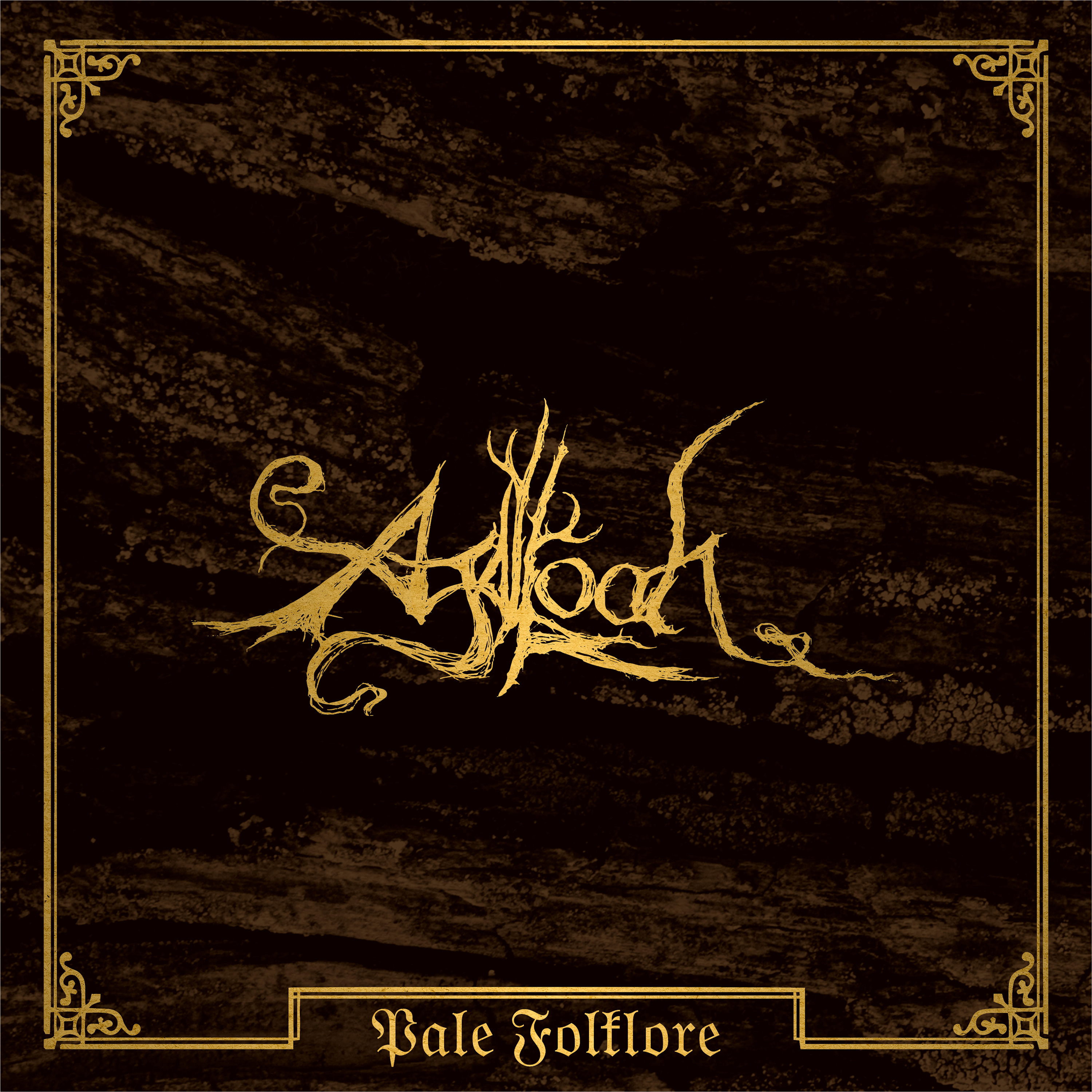

When revisiting albums that were highly formative — either on a personal level or to the development of a certain sound — there’s always the chance that they don’t hold up to your own memories, or the pedestal they’re put on by the scene at large. One such album that fits both types of formative is Agalloch’s 1999 debut full-length, Pale Folklore. I recall that this was always my favorite Agalloch release, and it was definitely a big first step in defining their signature blend of black, folk, and doom before post-metal became the standard. It’s been a bit of a dry spell for new music catching my ear recently, so when this hit our promo list, I figured there’s no better time to revisit this album for the first time in well over a decade. Does it hold up in the ways I thought it might? Not necessarily, but it was still a nostalgic and refreshing listen.
Before getting to Pale Folklore, I would be remiss if I didn’t discuss the not-too-distant anti-Semitic comments from John Haughm that stirred condemnation from his former Agalloch bandmates and the breakup of his post-Agalloch project Pillorian. With this reissue (and more teased to come) and a trio of reunion shows with original bandmates Don Anderson and Jason William Walton happening this year, it’s safe to say Haughm has been forgiven and successfully “un-canceled.” After all this is the modern metal scene, and all it really takes is the passage of time and some clout for you to get away with pretty much anything. Hell, even the most “woke/SJW/[insert buzzword here]” metal tabloid sites were giving well-wishes to a member of a notorious 2nd-wave black metal band who was attacked and hospitalized a couple weeks ago, and he’s literally a convicted (gross negligent) rapist. I’m absolutely not equating the two here, but some cancel culture we’ve got huh? I’ve got no authority to dictate what Haughm should’ve done other than apologize, or what is to be done after that. I’m just a guy with the privilege of getting to post on a site (and I fully recognize the continued exposure I’m giving the band simply by writing this review). I guess as my favorite group of idiots from Philadelphia would say, “let’s just move past it.”
For all the reverence they have within the canon of folk-inspired extreme metal, Agalloch never ranked particularly high on my own list. I’ve always respected their place as an influential act — undoubtedly some of my all-time favorites like Panopticon and Wolves in the Throne Room wouldn’t exist without them — yet they just never clicked with me past high school. Trying to picture what sort of niche Pale Folklore inhabited in 1999, it feels in some ways to be the American answer to some of the more pagan-influenced acts in 2nd-wave black metal.
Ulver’s Bergtatt will forever be the absolute pinnacle of folk/black metal to me, and I’m always searching (without much success, so far) for albums that evoke the same atmosphere it does. The melodic leads backed by subdued (yet forward pushing) rhythms that kick off “She Painted Fire Across the Skyline” and Haughm’s echoing cleans are so evocative of Ulver’s aforementioned opus, that I can’t believe something so reminiscent of that album was staring me in the face this entire time. Haughm and Anderson’s harmonized folk-inspired leads are easily one of the strongest aspects of Pale Folklore. Another small thread that could be drawn to 90s Norway is the keyboard-only instrumental “The Misshapen Steed,” which could perhaps serve as a nod to similar instrumentals on the early Borknagar albums (courtesy of one Ivar Bjørnson).
As many parallels as there are to draw with the black metal that had preceded Pale Folklore, Agalloch had already begun to find their own sound. For starters, there’s not a single blast beat on the whole album! The drumming ultimately ends up serving its purpose, but it’s nothing to write home about; the transition from “Dead Winter Days” to “As Embers Dress the Sky” almost doesn’t even feel like one due to how similar the drum patterns are (the guitar leads once again come in to save the day). Some blistering black metal intensity would’ve been welcome to my ears, but a more gloomy doom-influenced sound seems to have been what the band was going for in the creation of many of the riffs. This is complemented by the large numbers of acoustic guitar interludes throughout the album as well.

There’s certainly an audience for the sound Agalloch were beginning to perfect on Pale Folklore, but as much as I appreciated going down memory lane and giving this album a relisten, I’m not part of that audience at the end of the day. The melodic leads and acoustic guitar breaks are the biggest highlights, but they don’t end up saving the album from some of its more simplistic tendencies. I see how that may be a contradictory criticism coming from a big fan of the Norwegian second wave, but if that sound is to be expanded upon, I’d like to hear much more than some of the painfully basic arpeggios and rhythms found here. Nevertheless, the three-part epic “She Painted Fire Across the Skyline” is almost worth the price of admission. This deluxe reissue includes a hardcover book covering the early period of the band as well as the full compendium of their demo material known as The Demonstration Archive, so longtime Agalloch fans will surely get lots out of this re-entry of the band back into the spotlight.
— Colin
Pale Folklore (Deluxe Reissue) will be available August 25 on Eisenwald / BMG. For more information on Agalloch, check out their Facebook and Instagram pages.



Leave a Reply