
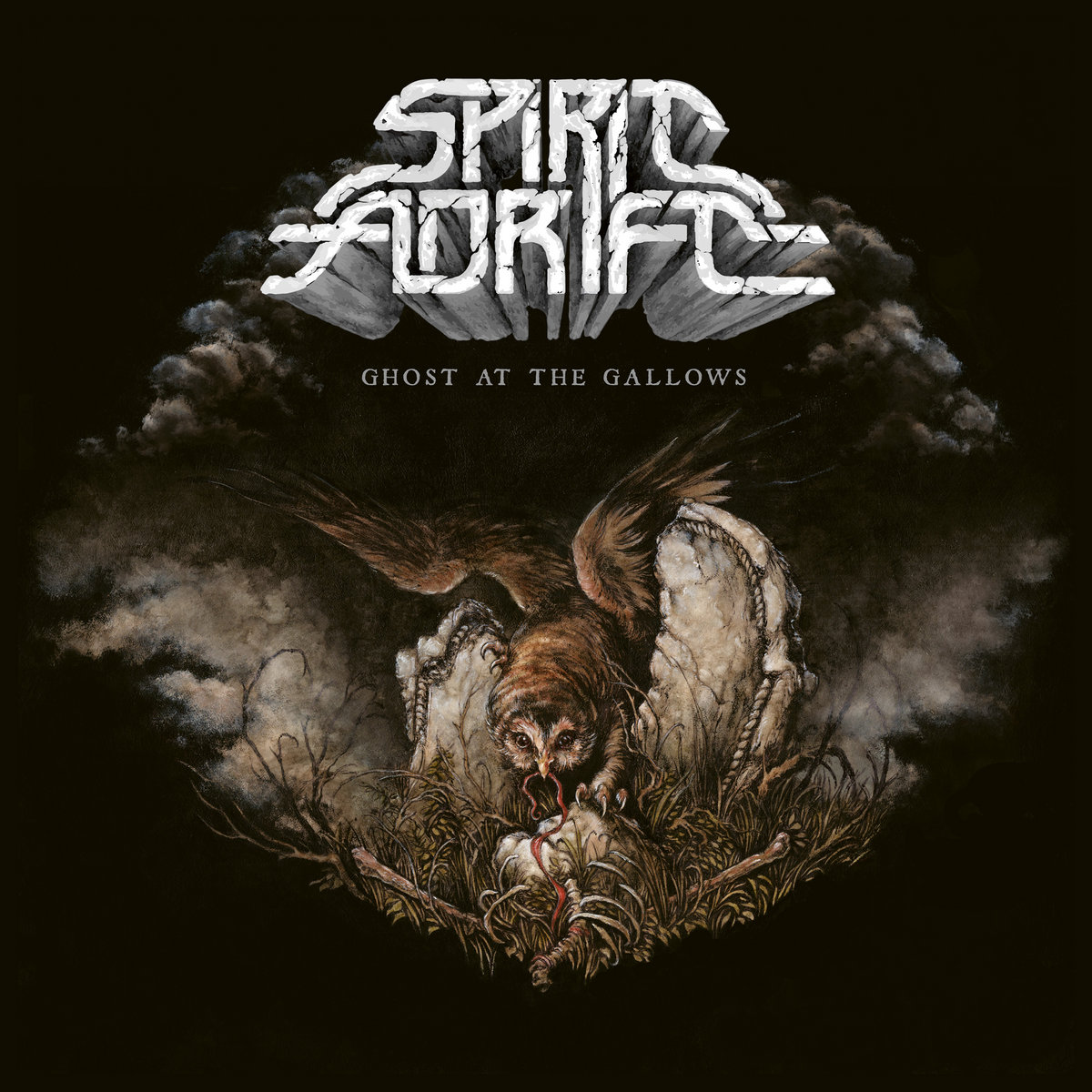

In 1940s and 50s Britain, there was a musical movement called trad jazz. Musicians attempted to revive the sounds of New Orleans Dixieland jazz, seemingly put off by the modern sounds of swing music and bebop. Despite their aversion to contemporary sounds, those contemporary sounds would sneak into the music. The idea of “getting back to basics” is a fallacy. Listening to Spirit Adrift’s Ghost at the Gallows brings to mind the idea of “trad metal.” Music that that on the surface might only be made for people who take phrases like “trve metal” or “kvlt” very seriously. In an era of heavy metal micro genres (so many genres that start with blackened), there’s certainly a contrarian streak in getting back to basics and there’s certainly an audience clamoring for “back to basics” metal. However, Ghost at the Gallows isn’t the sound of a tribute band cosplaying as Defenders of the Faith-era Priest or Peace Sells-era Megadeth. Spirit Adrift make vital, exciting music building on their predecessors, rather than just basking in those past glories.
Ghost at the Gallows invokes what could be called the spirit of ‘86, a time when heavy metal was at a cultural and commercial peak. An album meant to recall images of denim jackets, battle vests, and long, flowing hair. Heshers in parking lots waxing poetically on the merits of British Steel vs. Number of the Beast. Cans of beer getting tossed back as a beat up tape of Kill ‘Em All blasts from terrible car speakers. The kind of music made for guitar nerds sitting in their basement trying to perfect the riffs on songs like “Barn Burner” and “I Shall Return.” This is music meant to make heads bang and fists pump.
Unlike bands trying to be third or fourth generation Iron Maiden clones though, Ghost at the Gallows isn’t an act of necromancy. There’s legit guitar wizardry here informed by the past that still sounds fresh. “Give Her to the River” opens the album with the kind of slow, classical guitar playing familiar to anyone on their third or fourth copy of Master of Puppets or Ride the Lightning. Once the twin guitar attack kicks off and front man Nate Garrett’s Ian Gillan-esque vocals start soaring, you know you’re in for something. Not many bands choose to do a “For Whom the Bell Tolls” type song and follow it with “Fade to Black.” But Spirit Adrift are willing to follow the absolute ripper of a song “Hangman’s Revenge” with the mournful “These Two Hands.” The album closes with the heavy as hell title track as if Spirit Adrift wanted to save their best for last on an album full of great tracks. It alternates between the purest, heaviest riffs and the quiet guitar lines, a push and pull of heaviness and emotionality. On top of the music, Nate Garrett’s lyrics address his own feelings of mortality giving the songs both sonic and emotional heaviness. It puts him in the company of Judas Priest’s heavily queer coded lyrics from their gay front man or the struggles with PTSD and mental illness on Metallica’s Master of Puppets. Spirit Adrift know that heavy music is at its best when being confrontational both musically and lyrically.

Ghost in the Gallows isn’t an album made by mimics or an ironic tribute act. While it may sound to many as back to basics, there’s nothing basic about this album. Ghost in the Gallows may harken back to an era of guitar heroes and massive sounding albums, but when those things are done right there’s a reason people love them. Spirit Adrift do them in ways that feel inspired and not derivative. In the same way the Trad Jazz musicians were connoisseurs of older jazz, Spirit Adrift are genuine connoisseurs of heavy metal music and borrow from such a wide spectrum of the genre’s history, past and present.
— D. Morris
Ghost at the Gallows is available now on Century Media. For more information on Spirit Adrift, visit their website, Facebook page, Instagram, and Twitter.



Leave a Reply