
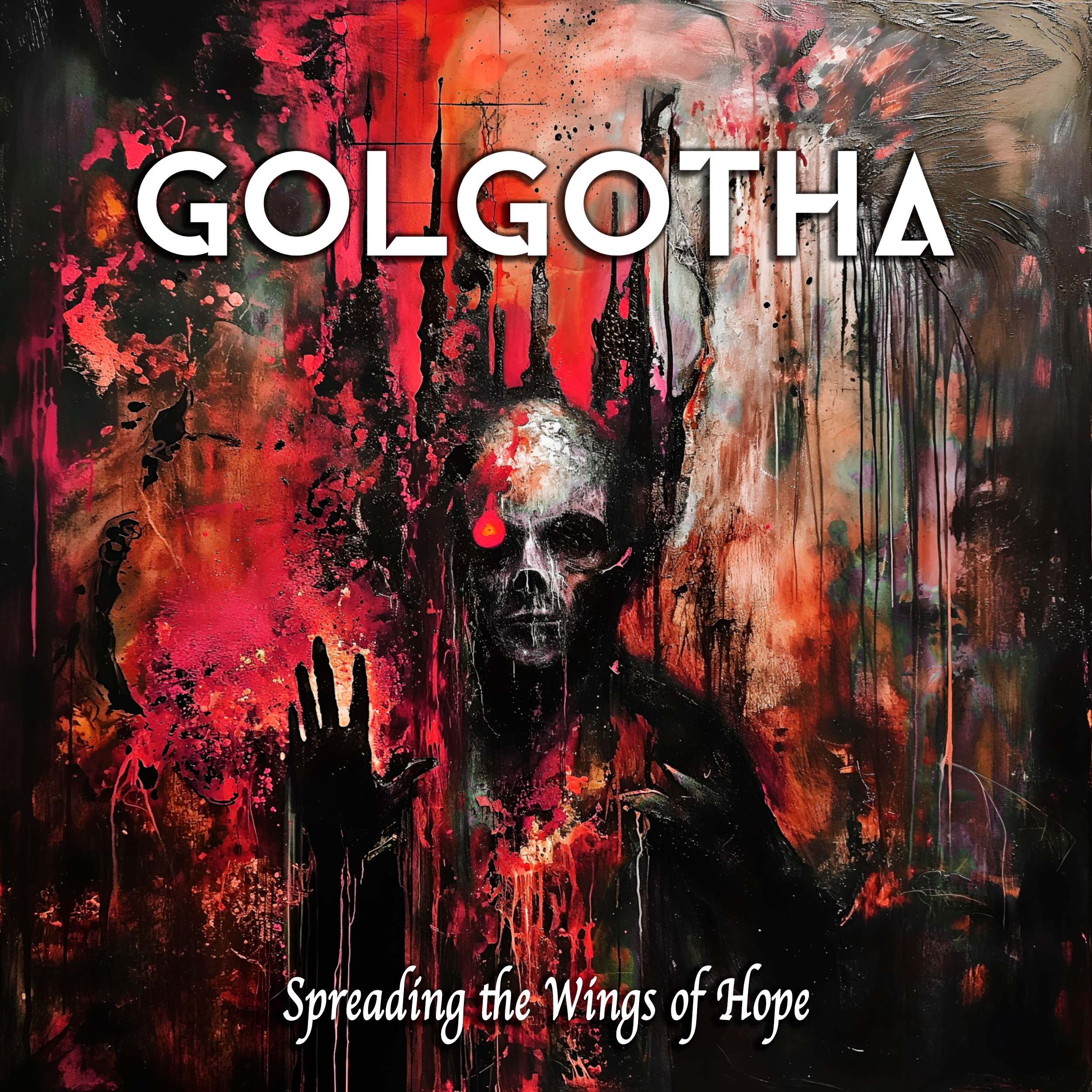

For me, death-doom has always been a genre that I associate with Finland, as they are masters of deep melancholy and heartbreak. However, this year I decided to get out of my comfort zone and try to see what other strains of death-doom exist and what they sound like. After finding out how great Faroese death-doom is, I heard that Spanish band Golgotha were going to release a new album. Curiosity piqued, and I decided to dive into Spreading the Wings of Hope and see what Spain had to offer to the realm of death-doom.
First track “For Every Tear” starts off slow and somber, before picking up the pace to introduce the two components that will interplay with each other: Andrew Espinosa’s harsh screams and María Lladó’s clean vocals. Although the vocals are what catches the attention first, it’s the instrumentation on the first half of the record that ultimately stands out. The music is slow yet chugging, occasionally changing between the speed of doom and the intensity of death metal. Once the track ends, it quickly segues into “Gilded Cage”, a song more in line with the likes of Hanging Garden, as this is where the melody kicks. Whereas “For Every Tear” tears the bandage off and pushes you deep into death-doom territory, “Gilded Cage” is a catchier yet melancholic affair, where you can’t help but hum along and move to the beat. From sweeping guitars to emotional solos, the first half triumphs with (delightful) melancholia, pulling you in with the promise that the music is only going to get more intricate from here.
Towards the latter half of the album, as Golgotha showcases more of the vocals, the more I was reminded of early 2000s gothic metal. For example, Lladó’s voice reminds specifically of Østen Bergøy’s in Tristania’s World of Glass – they have the same smoky tone, giving the music a mature outlook. Lladó’s vocals also ooze wisdom, as if the listener believes everything she tells you. This, combined with Espinosa’s harsh screams, creates a balanced interplay that is both emotional and towering. The music only heightens this interplay, yielding this enthralling dynamic that becomes the highlight of the record. The vocals also carry so much weight that they create this cocoon of intimacy, as you can’t help but listen to the story Golgotha is creating. By the end of the album, you are transfixed, wanting to listen to the record again just to see if there is anything you missed on the first play.
However, despite the vocals and the atmosphere Golgotha has created, Spreading the Wings of Hope has a minor mixing issue. There are moments that the instrumentation intrudes on the vocals, sounding “louder” and incredibly like the vocals. If you aren’t paying attention, you might believe that you are hearing the same tone without distinguishing vocals from, say, the guitars. Because of this, songs like “A Solitary Soul” and “Human Vultures” sound muddled, as if being dragged through molasses. While this may be seen a part of the tropes of death-doom, I believe the mixing could have been cleaner, allowing the listener to better distinguish between vocal tone and instrument.

Spreading the Wings of Hope is a grower of an album, creating trust and intimacy with each new listen. Despite its problems with mixing, this album struck a chord with me. The more I listened to the album, the more things I enjoyed in it, to the point where I was singing and humming along. I would not be surprised if Spreading the Wings of Hope ends up in an EOY list at the end of the year. Golgotha has found a form of death-doom that balances the melancholic with the melodic, scratching a particular sonic itch.
–Hera
Spreading the Wings of Hope is available June 14 on Ardua Music. For more information on Golgotha, visit their official Facebook.



Leave a Reply